From fish rock to elephant rock, AlUla reveals Saudi Arabia’s stone wonders
The deserts of AlUla continue to astonish visitors with timeless natural wonders

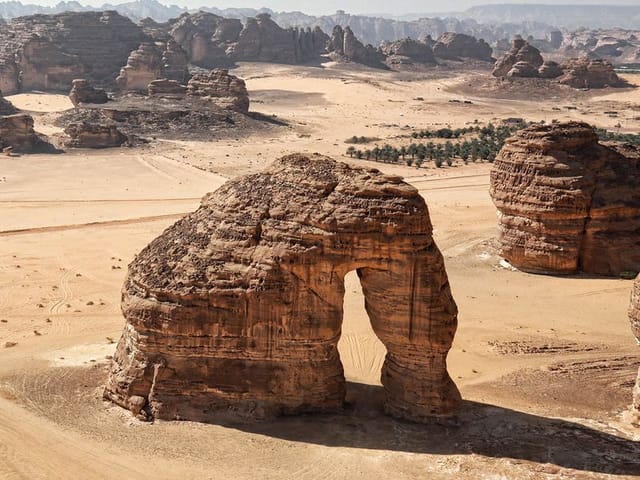
1/8
AlUla,
in northwestern Saudi Arabia, is a land of extraordinary natural beauty
and deep history. For thousands of years, its famed oasis, framed by
dramatic sandstone mountains, has sustained diverse flora, fauna, and
thriving human communities. What makes AlUla truly unique is its
geological legacy, showcasing three distinct eras of Earth’s past. The
oldest formations, the Precambrian Arabian Shield rocks, are layered
with sediments deposited over millions of years. These layers preserve a
permanent record of ancient environments, including fossilised plants
and animals, offering remarkable insights into Earth’s evolution while
shaping AlUla’s breathtaking and timeless desert landscape.
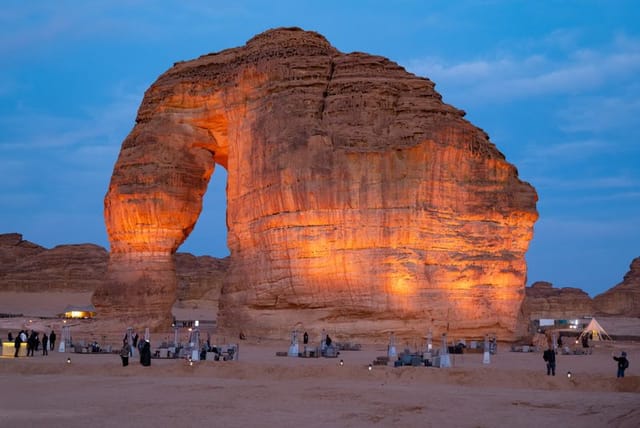
2/8
Elephant
Rock, AlUla’s most iconic natural wonder, rises 52 meters into the
Arabian sky, resembling a giant elephant with its trunk rooted to the
ground. Unlike the nearby Nabataean tombs of Hegra, carved by human
hands, this sandstone colossus was sculpted by wind and water erosion
over millions of years. Surrounded by golden sands and other majestic
formations, Elephant Rock dominates the landscape — a timeless reminder
of nature’s artistry and the enduring power of the desert.
Shutterstock
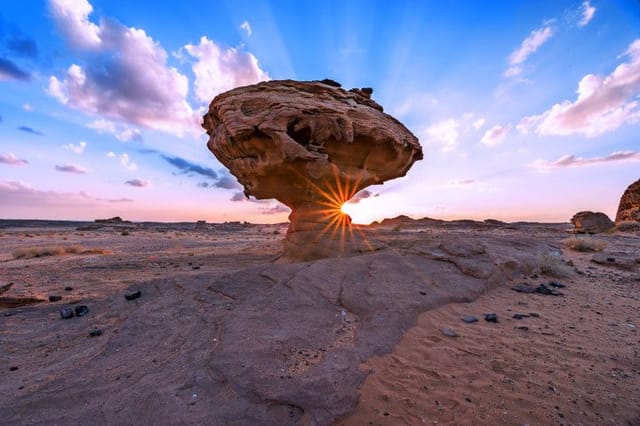
3/8
In
AlUla’s Sharaan nature reserve, mushroom-shaped rocks stand as striking
natural wonders. The most famous formation, sculpted over millions of
years, owes its shape to erosion, where wind wears away the softer lower
layers of sandstone more quickly. Covering 1,500 square kilometres of
red-rock canyons, desert valleys, and seasonal wildflowers, the reserve
is dedicated to protecting and restoring AlUla’s fragile ecosystem.
Conservation efforts are underway to help native flora and fauna reclaim
their natural habitat.
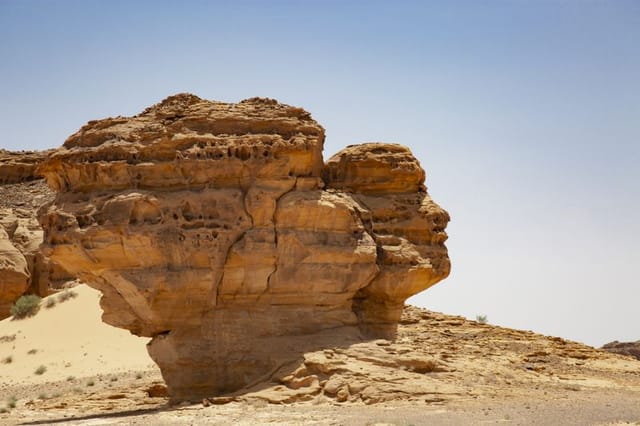
4/8
Among
the monumental tombs of Hegra, near Jabal Al Ahmar, stands Face Rock — a
sandstone formation resembling a human head gazing across the desert.
Like many of AlUla’s natural wonders, it was shaped by centuries of
erosion. Sunrise and sunset are the best times to visit, when shifting
light enhances the illusion and makes the rock appear to glow from
within. This striking landmark captivates visitors and photographers,
offering a magical glimpse into AlUla’s timeless landscape.

5/8
The
Arch (also known as Rainbow Rock). Its bridge-shaped structure, which
resembles a rainbow flanked by two clouds, is a rare sight. Enthralled
by this sprawling display of sandstone, don’t miss spotting
semi-precious desert diamonds on-site.

6/8
The
Dancing Rocks are so-called because these formations are sculpted by
nature to appear as if they are swaying in unison. Located in the
Raggasat Valley, the rocks dance together, slightly removed from the
surrounding rock formations. This place is famous for hiking activities
and the dune buggy experience.

7/8
In
the remote desert areas of AlUla, find stark, black volcanic rock and
inactive volcanoes which stand atop sandstone and are surrounded by seas
of golden sand to make for truly dramatic, other-worldly sights. Some
of those areas are visitor-friendly, with guides to experience hiking
around the top of a volcano. Khaybar, the neighbouring Oasis in the
south of AlUla, is well known for its two famous sites: The White
Volcano and the Black Volcano.
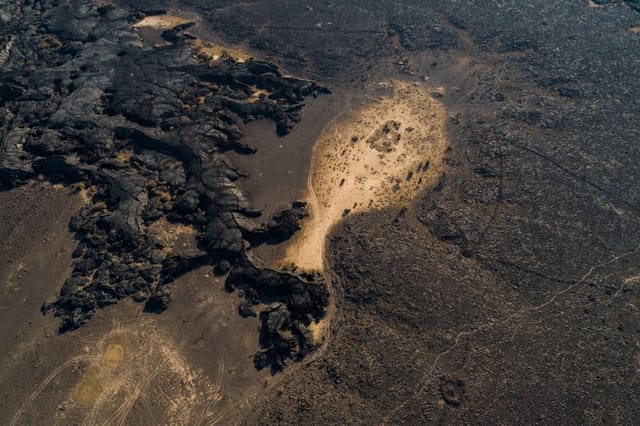
8/8
Lava
flows- the earliest human activity is evidenced in AlUla in Harrat
Uwayrid and elsewhere in northwestern Saudi Arabia in Harrat Khaybar.
These important volcanic areas comprise two of the largest in Saudi
Arabia. Harrat Khaybar includes a spectacular 100-kilometre-long vent
system containing lava domes, tuff rings, basaltic cones and the Jabal
Qidr stratovolcano. The dramatic lava flows of volcanic events can be
seen across the region.

No comments:
Post a Comment