The Jewish Roots of the USSR and the USSA
The Soviet Union and Alexander Solzhenitsyn
By Ron Unz
Decades ago when I was in college and grad school I had a strong side-interest in the Soviet Union and its history. During those years I may have read as many as one hundred books on those subjects.
At that point, my views on most historical matters were almost entirely mainstream and conventional, closely conforming to what I had absorbed from our major media outlets and standard history textbooks.
During the last couple of decades my understanding of the world and its history has undergone the radical transformation that I have documented in my lengthy American Pravda series. But this tidal wave of revelations has left intact my view of the USSR, which has scarcely changed since the late 1970s. Indeed, the very title of my series drew upon the name of the leading Soviet newspaper, which then and now has been a watchword for dishonest government propaganda.
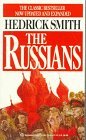
Much of my initial perspective on Soviet society was shaped by Pulitzer Prize-winner Hedrick Smith, the longtime Moscow bureau chief of New York Times, and his thick bestseller on the subject. Published a half-century ago in 1976, The Russians immediately attracted great critical acclaim and huge national sales, and I had read it a few years later.
I recently reread Smith’s book for the first time since my freshman year in college, and its portrayal of the Soviet Union still closely matched my current beliefs.
His 700 pages of text depicted a bizarre, dysfunctional society, irrational and very poorly designed. Soviet citizens had to spend endless hours waiting in lines to purchase ordinary products that any Westerner could so easily obtain within minutes at a local grocery or department store. Soviets carried string bags with them wherever they went so that they could scoop up any good shoes or good sausages if they chanced upon a sudden supply, thereby reducing highly-educated urban professionals to the existence of primitive hunter-gatherers. Even the impoverished Third Worlders of that era seemed to live lives free from the ridiculous daily inconveniences of the supposedly far wealthier and more advanced Soviets.
An economic system so strange and poorly functioning hardly seemed likely to permanently endure. Across our dining hall table my friends and I generally agreed that the USSR would eventually collapse though the date was uncertain. Predicting the likely trajectory of future events is usually far easier than determining the precise timing. In 1970 the prominent dissident Andrei Amalrik had famously published Will the Soviet Union Survive Until 1984?, but his boldly predictive timeline was off by a few years.
When the collapse finally came, I was hardly surprised except that it was almost entirely peaceful. As the Soviet Bloc and the USSR itself disintegrated I found it quite remarkable that such a vast ideological empire would fall with so little bloodshed. At the end, almost no one believed in the system enough to defend it.
The contemporary Soviet Union that Smith and others sketched out seemed a grim and gray place, dull and uninspiring rather than dangerous, and best exemplified by its elderly and doddering General Secretary Leonid Brezhnev and his equally decrepit Politburo colleagues. For those reasons, my interest and my readings instead focused upon the earlier decades of Soviet history, such as the Bolshevik Revolution that had established the system and the gruesome Stalin era that soon followed.
As I began to read serious works of Soviet history, I was initially a little intimidated by the massive thickness of the three volumes of Alexander Solzhenitsyn‘s renowned Gulag Archipelago and its 2,000 pages. But I finally read it in the mid-1980s, and just as the glowing reviews had suggested, the epic story that he told of the enormous system of brutal forced labor camps deeply impressed me.

I was studying at Cambridge University that year and I also read most of the author’s equally thick fictional works including The First Circle, Cancer Ward, and August 1914. In addition, I reread One Day in the Life of Ivan Denisovich, the very short novel that had originally launched his meteoric literary career in the post-Stalin USSR.
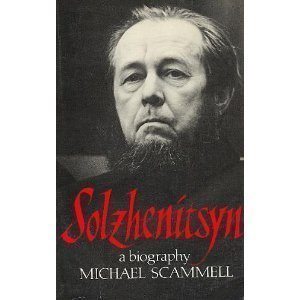
Based upon all those works, I certainly regarded him as one of the greatest writers I had ever encountered, fully deserving of his Nobel Prize and all the other accolades he had received. Michael Scammell’s outstanding thousand page biography Solzhenitsyn told the fascinating story of his life, certainly making him one of the most impressive figures in our era.
As a helpless prisoner trapped along with millions of others within the enormous Gulag—a mere zek—he had decided that he would record his personal experience and thereby confront one of the most powerful tyrannies the world had ever known. His writings eventually played an important role in illuminating the horrors of that regime and thereby ultimately bringing it down.
My own verdict on his historic stature was then widely shared. Solzhenitsyn was hugely lionized by the West, including by its political and media elites.
Yet I also noticed some incidents at the time that I only much later understood in their proper context. As I wrote in 2018:
I remember in the 1970s the tremendous gusts of American praise for Solzhenitsyn’s three volume Gulag Archipelago suddenly encountered a temporary headwind when someone noticed that his 2,000 pages had included a single photograph depicting many of the leading Gulag administrators, along with a caption revealing their unmistakably Jewish names. This detail was treated as serious evidence of the great author’s possible anti-Semitism since the actual reality of the enormously large role of Jews in the NKVD and the Gulag system had long since disappeared from all the standard history books.
The following week I published an article expanding on that topic. I noted that a quarter-century later Solzhenitsyn finally dared to fully address that hidden history, with severe consequences for his remaining status in the West.
For decades most Americans would have ranked Nobel Laureate Alexander Solzhenitsyn as among the world’s greatest literary figures, and his Gulag Archipelago alone sold over 10 million copies. But his last work was a massive two-volume account of the tragic 200 years of shared history between Russians and Jews, and despite its 2002 release in Russian and numerous other world languages, there has yet to be an authorized English translation, though various partial editions have circulated on the Internet in samizdat form.
At one point, a full English version was briefly available for sale at Amazon.com and I purchased it. Glancing through a few sections, the work appeared quite even-handed and innocuous to me, but it seemed to provide a far more detailed and uncensored account than anything else previously available, which obviously was the problem. The Bolshevik Revolution resulted in the deaths of many tens of millions of people worldwide, and the overwhelming Jewish role in its leadership would become more difficult to erase from historical memory if Solzhenitsyn’s work were easily available. Also, his candid discussion of the economic and political behavior of Russian Jewry in pre-revolutionary times directly conflicted with the hagiography widely promoted by Hollywood and the popular media. Historian Yuri Slezkine’s award-winning 2004 book The Jewish Century provided many similar facts, but his treatment was far more cursory and his public stature not remotely the same.
Near the end of his life, Solzhenitsyn gave his political blessing to Russian President Vladimir Putin, and Russia’s leaders honored him upon his death, while his Gulag volumes are now enshrined as mandatory reading in the standard high school curriculum of today’s overwhelmingly Christian Russia. But even as his star rose again in his own homeland, it seems to have sharply fallen in our own country, and his trajectory may eventually relegate him to nearly un-person status.
A couple of years after the release of Solzhenitsyn’s controversial final book, an American writer named Anne Applebaum published a thick history bearing the same title Gulag, and her work received enormously favorable media coverage and won her a Pulitzer Prize; I have even heard claims that her book has been steadily replacing that earlier Gulag on many college reading lists. But although Jews constituted a huge fraction of the top leadership of the Soviet Gulag system during its early decades, as well as that of the dreaded NKVD which supplied the inmates, nearly her entire focus on her own ethnic group during Soviet times is that of victims rather than victimizers. And by a remarkable irony of fate, she shares a last name with one of the top Bolshevik leaders, Hirsch Apfelbaum, who concealed his own ethnic identity by calling himself Grigory Zinoviev.
The Concealed Jewish Roots of Soviet Communism
Applebaum’s effort to almost exclusively portray Jews as the unfortunate victims of the brutal Communist regime that they so heavily dominated and led was particularly grotesque. But throughout the second half of the twentieth century, mainstream American academia had made a concerted effort to airbrush away the true ethnic history of the Bolshevik Revolution and the many millions who perished under the brutal Soviet regime that it successfully established.
That project was assisted by the fact that many of our most influential Soviet historians came from that same ethnic background. But I explained that although the works of leading scholars such as Adam Ulam and Richard Pipes carefully sidestepped any mention of those facts, the true history remained readily apparent to any careful reader of their works.
I was not so totally naive that I did not recognize some of the powerful taboos surrounding discussion of the Bolsheviks, particularly regarding their ethnic composition. Although most of the books hardly emphasized the point, anyone with a careful eye for the occasional sentence or paragraph would surely know that Jews were enormously over-represented among the top revolutionaries, with three of Lenin’s five potential successors— Trotsky, Zinoviev, and Kamenev—all coming from that background, along with many, many others within the top Communist leadership. Obviously, this was wildly disproportionate in a country having a Jewish population of perhaps 4%…
I went on to note that all leading contemporaneous sources had acknowledged these obvious facts, and only decades later had our standard histories instead begun to exclude them.
The extent to which established historical facts can appear or disappear from the world should certainly force all of us to become very cautious in believing anything we read in our standard textbooks, let alone what we absorb from the more transient electronic media.
In the early years of the Bolshevik Revolution, almost no one questioned the overwhelming role of Jews in that event, nor their similar preponderance in the ultimately unsuccessful Bolshevik takeovers in Hungary and parts of Germany. For example, former British Minister Winston Churchill in 1920 denounced the “terrorist Jews” who had seized control of Russia and other parts of Europe, noting that “the majority of the leading figures are Jews” and stating that “In the Soviet institutions the predominance of Jews is even more astonishing,” while lamenting the horrors these Jews had inflicted upon the suffering Germans and Hungarians.
Similarly, journalist Robert Wilton, former Russia correspondent of the Times of London, provided a very detailed summary of the enormous Jewish role in his 1918 book Russia’s Agony and 1920 book The Last Days of the Romanovs, although one of the most explicit chapters of the latter was apparently excluded from the English language edition. Not long afterward, the facts regarding the enormous financial support provided to the Bolsheviks by international Jewish bankers such as Schiff and Aschberg were widely reported in the mainstream media.
Jews and Communism were just as strongly tied together in America, and for years the largest circulation Communist newspaper in our country was published in Yiddish. When they were finally released, the Venona Decrypts demonstrated that even as late as the 1930s and 1940s, a remarkable fraction of America’s Communist spies came from that ethnic background.
A personal anecdote tends to confirm these dry historical records. During the early 2000s I once had lunch with an elderly and very eminent computer scientist, with whom I’d become a little friendly. While talking about this and that, he happened to mention that both his parents had been zealous Communists, and given his obvious Irish name, I expressed my surprise, saying that I’d thought almost all the Communists of that era were Jewish. He said that was indeed the case, but although his mother had such an ethnic background, his father did not, which made him a very rare exception in their political circles. As a consequence, the Party had always sought to place him in as prominent a public role as possible just to prove that not all Communists were Jews, and although he obeyed Party discipline, he was always irritated at being used as such a “token.”
However, once Communism sharply fell out of favor in 1950s America, nearly all of the leading “Red Baiters” such as Sen. Joseph McCarthy went to enormous lengths to obscure the ethnic dimension of the movement they were combatting. Indeed, many years later Richard Nixon casually spoke in private of the difficulty he and other anti-Communist investigators had faced in trying to focus on Gentile targets since nearly all of the suspected Soviet spies were Jewish, and when this tape became public, his alleged anti-Semitism provoked a media firestorm even though his remarks were obviously implying the exact opposite.
This last point is an important one, since once the historical record has been sufficiently whitewashed or rewritten, any lingering strands of the original reality that survive are often perceived as bizarre delusions or denounced as “conspiracy theories.” Indeed, even today the ever-amusing pages of Wikipedia include an entire 3,500 word article attacking the notion of “Jewish Bolshevism” as an “antisemitic canard.”
- American Pravda: The Bolshevik Revolution and Its Aftermath
Ron Unz • The Unz Review • July 23, 2018 • 7,000 Words - American Pravda: The Nature of Anti-Semitism
Ron Unz • The Unz Review • July 30, 2018 • 5,500 Words
The extent to which Wikipedia and other standard sources of information have desperately sought to obfuscate the obvious facts is really quite remarkable.
In that same 2018 article I mentioned the striking omissions that could be found in the weightiest volumes on the subject.
In 1999, Harvard University published the English edition of The Black Book of Communism, whose six co-authors devoted 850 pages to documenting the horrors inflicted upon the world by that defunct system, which had produced a total death toll they reckoned at 100 million. I have never read that book and I have often heard that the alleged body-count has been widely disputed. But for me the most remarkable detail is that when I examine the 35 page index, I see a vast profusion of entries for totally obscure individuals whose names are surely unknown to all but the most erudite specialist. But there is no entry for Jacob Schiff, the world-famous Jewish banker who apparently financed the creation of the whole system in the first place. Nor one for Olaf Aschberg, the powerful Jewish banker in Sweden, who played such an important role in providing the Bolsheviks a financial life-line during the early years of their threatened regime, and even founded the first Soviet international bank
Although the mainstream Soviet histories I read always carefully skirted the ethnic dimension, they agreed that at the time of Lenin’s declining health and eventual death in the early 1920s, his five potential Soviet successors had been Trotsky, Zinoviev, Kamenev, Stalin, and Bukharin. The first three of those individuals were Jewish, while Lenin himself had been part Jewish.
Moreover, one of the most powerful early Bolsheviks had been Jacob Sverdlov. He served as the first head of the Soviet government and had personally authorized the execution of the Romanov family, probably ranking second only to Trotsky in his influence. If not for his early death in 1919, he almost certainly would have been numbered in that select group of potential successors to Lenin, and he too was Jewish.
Although that Bolshevik hierarchy of influence was hardly exact and it shifted over time, all available evidence supported this same conclusion that the top Bolshevik leadership was overwhelmingly Jewish in a country in which Jews were only 4% of the total population.
For example, Trotsky’s biography mentions a conversation he had with Lenin in which Sverdlov, Bukharin, Zinoviev, Kamenev, and Stalin were named as the most important Bolsheviks. Moreover, in Trotsky’s posthumously published 1941 book on Stalin, the exiled leader sought to undercut his bitter rival’s early importance by reproducing a postcard issued by the early Bolshevik government depicting the six leaders of the revolution as being Lenin, Trotsky, Sverdlov, Zinoviev, Kamenev, and Lunacharsky, of whom only the last was non-Jewish.
Putin obviously possesses better current access to the Soviet archives than anyone else, and a few years ago he stated that Jews constituted perhaps 80-85% of the early Soviet government.
Given that the top Bolshevik leadership was so overwhelmingly Jewish, as Stalin consolidated his power during the 1930s and purged all his real or potential rivals, many of his victims were necessarily of that ethic background.
This has often led to the widespread impression that the resulting Stalinist government had few Jews near the top, but this was hardly the case.
During the Stalinist era, the dictator’s most powerful lieutenant was Lazar Kaganovich, who was Jewish, as was Maxim Litvinov, who served as foreign minister throughout nearly all of the 1930s. Stalin’s first NKVD chief Genrikh Yagoda was Jewish as was the wife of Nikolai Yezhov, the man who replaced him. Also Jewish was Lev Mekhlis, the top Soviet military commissar during World War II, who could order leading generals shot on his own authority and who went on to hold a variety of other very senior positions. Probably the most prominent Stalinist journalist and propagandist was Ilya Ehrenberg, who came from that same background.
And just as Solzhenitsyn’s Gulag trilogy had glancingly suggested with the captions to a single controversial photograph, throughout nearly all of the 1930s that massive archipelago of brutal prison camps had been run by a succession of three different Jews, Lazar Kogan, Matvey Berman, and Israel Pliner, with many of their subordinates having the same background.
So the Jewish skew of the Stalinist regime was small only by comparison with the earlier period of Bolshevik leadership.
Prison Sentences for Telling a Joke in the USSR and the USSA
As I sat in my Cambridge University grad student housing or in one of the local common rooms and read Solzhenitsyn’s monumental trilogy more than forty years ago, I sometimes snickered a little at just how insane that Stalinist era had been.
The facts that the author casually recounted were so bizarre that they seemed like something out of a madhouse, but as far as I could tell, they were generally true.
As Solzhenitsyn told the story, huge numbers of Soviet citizens who were fully loyal to the regime were given ten-year Gulag sentences for the most trivial of offenses, sometimes even merely for telling a stupid, harmless joke.
According to the author, that strange pattern of punishment was well known and widely acknowledged by everyone involved in the system. When some unfortunate inmate serving a fifteen- or twenty-year sentence complained to the camp guards that he was completely innocent and hadn’t done anything at all, they just laughed at him and said he was obviously lying since everyone knew that totally innocent people only received ten-year sentences.
All of those things had happened years before I had been born, and fortunately the USSR had abandoned that terrible madness soon after Stalin’s 1953 death. By the 1970s and the 1980s the notion of handing out ten-year prison sentences to inoffensive citizens who had merely told a casual joke would have seemed just as insane to ordinary Soviet citizens as it did to me.
So I mentally filed away that historical anecdote as demonstrating the upper limits of the totalitarian lunacy that a deranged dictator and his diabolical subordinates could impose upon an undemocratic and ideologically extreme society that lacked any of our own constitutional rights.
However, a few months ago a strange story out of Florida suddenly revived those memories.
I doubt whether more than a sliver of Americans are familiar with the plight of Gabriela Saldana, a 23-year-old college student, and that very lack of major coverage may reveal disturbing facts about our media organs.
Almost no national outlets have reported her situation, but Saldana’s story was very briefly covered by a local newspaper. According to the Tallahassee Democrat:
A Florida International University student’s WhatsApp jokes about Israel’s prime minister dropping a bomb during a campus event may be protected speech under the First Amendment, free speech experts say.
Gabriela Saldana, 23, was arrested by FIU police April 16 for “written threats to kill or do bodily injury,” according to the arrest affidavit. Saldana admitted to sending the messages to a WhatsApp chat of about 215 people, for an engineering capstone presentation event set for April 17 at FIU’s Ocean Bank Convocation Center in Miami.
A viral screenshot posted on X of the chat shows a message from her referencing Israeli Prime Minister Benjamin Netanyahu, saying, “Netanyahu, if you can hear me, drop some bonbons for us capstone students in Ocean Bank Convention Center.”
Additionally, an FIU police detective said at a bond hearing that Saldana wrote referring to another member in the group chat, “There is going to be a bomb in the Ocean Bank Convocation Center, and it is going to be Jonathan’s fault.”
Saldana later called it a “dumb joke.” In a statement, Saldana’s public defender Carlos Martinez said in a statement that the First Amendment is “front and center in this case,” and the context stems from a viral “Netanyahu Please” joke trend on TikTok.
“Young people are joking with memes urging Netanyahu’s intervention in all sorts of everyday situations,” Martinez said. “That is the context. It was not intended as a threat. With the charge she faces, intent matters.”
But a judge disagreed.
In the bond hearing, Judge Mindy Glazer said it appeared to her that Saldana was trying to “threaten these students.” A request for comment is pending from FIU on the student’s arrest.
“To an objective person, it’s not a joke,” Glazer said.
The article went on to say that Saldana’s cause had been taken up by free speech advocates:
The Foundation for Individual Rights and Expression (FIRE), a national free speech group, sent a letter to FIU police April 23 requesting that police consider a student’s First Amendment rights prior to an arrest in the future. It argued that there wasn’t any basis to consider her posts a “serious threat.”
“Saldana’s speech is protected by the First Amendment,” wrote Dominic Coletti, the program officer for FIRE’s Student Press Freedom Initiative. “It is not credible that anyone would reasonably believe an FIU undergraduate would have the power to order the ‘dropping’ of bombs anywhere, let alone in the United States, by any foreign power.”
Courts are also going to examine the context of the joke, such as whether it’s the kind of group chat where they’re often joking around like this, or how did people take it, said Alex Morey, a First Amendment specialist at the Freedom Forum.
“We have the right to make dumb jokes, as long as they don’t cross the line into a true threat,” Morey said.
FIRE’s involvement in the case included sending a 1,500 word letter to the police department recounting all the details of the incident and strongly criticizing Saldana’s arrest. FIRE also Tweeted out a short clip from her arraignment hearing:
That FIRE letter provided some further context to Saldana’s WhatsApp remarks. She had said that she needed Netanyahu’s military intervention because “Finals are next week and I’m not ready.” Another student then responded with a Spider-Man meme, and after Saldana was criticized for her statements, she apologized for making a “dumb joke” and said “i sowwy :(” with her childish spelling of that last word further demonstrating the obviously jocular nature of the exchange.
An article in a student newspaper pointed out that Netanyahu jokes, sometimes involving dark humor with violent overtones, had become widespread on TikTok and other social media platforms popular among the young members of Gen-Z.
Nonetheless, Saldana is being charged with “making a written or electronic threat to kill or cause bodily harm,” a second degree felony. According to the Gemini AI, this is covered by Florida Statute § 836.10, and if convicted she could face up to 15 years in state prison.
The likelihood of Saldana’s conviction may not be high, let alone that she would receive such an extremely harsh maximum sentence. But the notion of a student facing 15 years in prison for making a casual joke about the violent proclivities of the Israeli prime minister seems quite shocking, while the near-total silence of our national media raises dark suspicions.
I would assume that similar jokes on social media about other controversial public figures are widespread among high school and college students.
Let us suppose that everything in the case had been exactly the same but that Saldana’s joke had been directed against President Donald Trump, and she would be facing 15 years in prison for having made it. Surely her prosecution would have immediately become a top national news story, with an army of prominent pundits and celebrities declaring that our cherished American freedoms stood or fell with the fate of that young Florida college student.
This reminded me of a shrewd observation widely misattributed to Voltaire:
To learn who rules over you, simply find out who you are not allowed to criticize.
The Massive Crackdown on Criticism of Israel or Jews
A young Florida college student was brought into the courtroom clad in an orange jumpsuit and threatened with a 15 year prison sentence for privately texting a joke about Netanyahu, a foreign leader. I do not recall that any of Solzhenitsyn’s stories of the Stalinist Gulag were as extreme as this one.

That striking visual image found on social media can only be understood with regard to the events of the last couple of years. The largest wave of political demonstrations on American college campuses since the 1960s took place in 2024 but was swiftly crushed and suppressed by an unprecedented government crackdown, harsher than anything ever previously seen in American history. As I wrote at the time:
For many months, horrific images of dead or dying Palestinian children have become widespread on relatively uncensored social media platforms such as TikTok and Elon Musk’s Twitter, and across America large numbers of college students have reacted to that carnage. Over the last two generations, they and their predecessors had been heavily indoctrinated in the story of the Holocaust and the terrible shame of those who stood by and did nothing as innocent men, women, and children were murdered. So with grisly scenes of what they consider a present-day genocide unfolding in real-time on their smartphones, a huge wave of protest demonstrations has swept across our colleges and universities, a campaign far greater than anything since the late 1960s movement opposing the Vietnam War.

College protests on a wide range of different social and ideological issues had been common for decades and these have sometimes focused on foreign policy controversies. But unlike all those previous examples, the protests criticizing Israel immediately provoked an enormously harsh and hostile reaction from our political and media establishment. When the presidents of Harvard and Penn were hauled before a Congressional committee and they emphasized their commitment to maintaining political free speech at their universities, both those Ivy League leaders were quickly forced to resign, an absolutely unprecedented development in American academic history.
Then last month the president of Columbia University sought to avoid a similar fate after she faced a grilling before that same House committee, so she quickly called in 100 NYC riot police who broke up the pro-Gaza demonstrations taking place on her campus and arrested many of the protesters. Images of burly, helmeted police manhandling peaceful students on their own campus for protesting a possible genocide went viral on social media, inspiring a huge wave of sympathy protests at dozens of other universities, many of which were soon broken up in similar fashion by local police raids. As of last week, some 2,800 college students have been arrested at dozens of schools for peacefully exercising their freedom of speech. This crackdown seems far more severe than anything since the late 1960s and in some respects may have even exceeded that previous peak set more than a half-century ago.
As I emphasized in an article last week, the scenes from Emory University were particularly shocking, with Georgia’s Republican governor ordering his state police to invade the grounds of one of the most prestigious local academic institutions and arrest the protesters. In one particularly dramatic incident a 57-year-old tenured professor of Economics named Carolyn Frohlin was distressed to see one of her own students being violently wrestled to the ground and approached him. For merely walking across her own campus, she was immediately grabbed by a hulking police sergeant and another officer, thrown to the ground, hog-tied, and arrested. CNN anchor Jim Acosta expressed total shock at this when he reported the story, and the video has now been viewed hundreds of thousands of times on YouTube…
Consider that a seemingly very respectable-looking middle-aged college professor was brutally man-handled and arrested by the police on her own campus merely for trying to closely observe the arrest of one of her own protesting students. I’m not sure whether anything like this had ever previously happened in American college history even during the height of the 1960s protest movement…
A couple of months later I added some further details:
Even worse scenes took place at UCLA as an encampment of peaceful protesters was violently attacked and beaten by a mob of pro-Israel thugs having no university connection but armed with bars, clubs, and fireworks, resulting in some serious injuries. A professor of History described her outrage as the nearby police stood aside and did nothing while UCLA students were attacked by outsiders, with 200 of the victims then arrested. According to local journalists, the violent mob had been organized and paid by pro-Israel billionaire Bill Ackman.
I have never previously heard of organized mobs of outside thugs being allowed to violently assault peaceful American student protesters on their own campus, something that seems far more reminiscent of turbulent Latin American dictatorships. The closest example that comes to mind might be the notorious 1970 “Hard Hat Riot” in New York City in which hundreds of pro-Nixon construction workers battled similar numbers of anti-war protesters on the streets of lower Manhattan, an incident so infamous that it has an extensive Wikipedia page of its own…
In the latest example of this, just last week three senior Columbia University administrators were removed from their posts when they were discovered to have privately texted each other with messages considered insufficiently supportive and respectful of the agitated accusations of widespread anti-Semitism made by Jewish activists at a public forum held on campus. This situation seems to greatly exceed anything that had happened during the endlessly vilified “McCarthy Era” of the 1950s.
I also explained that as part of this bipartisan political reaction, the House passed legislation that essentially banned all criticism of Jews or Israel:
Therefore it was hardly surprising that last week an overwhelming bipartisan 320-91 majority in the House passed a bill broadening the meaning of anti-Zionism and antisemitism in the anti-discrimination policies of the Department of Education by codifying the definitions used in our Civil Rights laws to classify those ideas as discriminatory.
Although I haven’t tried to read the text, the obvious intent is to force colleges to expunge such noxious activities as anti-Israel protests from their campus community or face loss of federal funds. This represents a striking attack against academic freedom as well as America’s traditional freedom of speech and thought, and may also pressure other private organizations to adopt similar policies. In a particularly ironic twist, the definition of antisemitism used in the bill clearly covers portions of the Christian Bible, so the ignorant and compromised Republican legislators have now wholeheartedly endorsed banning the Bible in a country in which 95% of the population has Christian roots…
This massive suppression of all political opposition to Zionism through a mixture of legal, quasi-legal, and illegal means has hardly escaped the notice of various outraged critics. Max Blumenthal and Aaron Mate are young Jewish progressives very sharply critical of Israel and its current attack on Gaza, and in their most recent livestream video a day or two before that Congressional vote, they agreed that Zionists were the greatest threat to American freedom and that our country was “under political occupation” by the Israel Lobby.
They may or may not have been aware that their angry denunciation closely paralleled one of the most notorious Far Right phrases of the last half-century, which condemned America’s existing political system as nothing more than ZOG, a “Zionist Occupation Government.” Over time, obvious factual reality gradually becomes apparent regardless of ideological predispositions.
- Israel/Gaza: The Masks Come Off in American Society
Ron Unz • The Unz Review • May 6, 2024 • 6,800 Words - American Pravda: Gaza Protests and the Legend of the Tiananmen Square Massacre
Ron Unz • The Unz Review • May 13, 2024 • 8,800 Words - Body Counts and Blood Libels in the Israel/Gaza Conflict
Ron Unz • The Unz Review • July 15, 2024 • 5,700 Words
ICE Raids Against Critics of Israel
These very harsh attacks on Gaza protesters and the unprecedented suppression of academic freedom took place under the Biden Administration, with elected Democrats overwhelmingly staying silent or endorsing these actions. So the resulting outrage among many party activists probably played a significant role in the victory of Trump later that same year.
Meanwhile, Trump’s signature issue in his successful attempt to regain the White House had been immigration. He promised to close our borders to further illegal immigration and expel the many millions of new migrants who had entered the country under what almost amounted to Biden’s de facto “open borders” policy.

Soon after Trump’s inauguration, his Department of Homeland Security began deploying its militarized federal immigration enforcement agents in numerous high-profile actions around the country. These troopers were widely called ICE, a loose term that actually subsumed agents of the Border Patrol as well. ICE soon became our largest and best-funded federal law enforcement agency, and its operations attracted a great deal of public attention, with the Trump Administration promising a massive crackdown on illegal immigrants and their deportation.
Yet oddly enough, all the highest profile early raids by ICE agents were actually directed against fully legal residents who had criticized Israel. As I wrote at the time:
Late last week an astonishing event occurred in American society, and video clips of that incident quickly went viral across the Internet.
A 30-year-old Tufts doctoral student and Fulbright Scholar from Turkey was walking across her Boston-area neighborhood on the way to a holiday dinner at a friend’s house when she was suddenly seized and abducted in the early evening by six masked federal agents of the Department of Homeland Security. The terrified young woman was handcuffed and taken to a waiting car, secretly detained for the next 24 hours without access to friends, family, or lawyers, then shipped off to a holding cell in Louisiana and scheduled for immediate deportation, although a federal judge has now temporarily stayed the proceedings.
Just one of the Tweets showing a short clip of that incident has been viewed more than 4.5 million times, with a much longer YouTube video accumulating another couple of hundred thousand views.
That very disturbing scene seemed like something out of a Hollywood film chronicling the actions of a dystopian American police state, and that initial impression was only solidified once media reports explained why Rumeysa Ozturk was snatched off the streets of her home town. Her only reported transgression had been her co-authorship of an op-ed piece in the Tufts student newspaper a year earlier sharply criticizing Israel and its ongoing attacks on the civilian population of Gaza.
Apparently, one of the many powerful pro-Israel censorship organizations funded by Zionist billionaires became outraged over her sentiments and decided to make a public example of her, so its minions in the subservient Trump Administration immediately ordered her arrest…
A day or two before that Tufts graduate student was snatched off the streets of her city, a 21-year-old Columbia University junior went into hiding to avoid a similar fate after federal agents raided her campus dorm to arrest her. As the Times reported, high school valedictorian Yunseo Chung had moved to the U.S. with her family from South Korea when she was 7, but her permanent residency was suddenly revoked for her public criticism of Israeli policy. She was ordered immediately deported back to a country that she barely even remembered.
This followed the storm of controversy unleashed earlier this month by the very high profile arrest of Mahmoud Khalil, a recent Columbia graduate student heavily involved in last year’s campus protests against the Israeli attacks on Gaza. Seized in an early morning raid on his campus student housing, which he shared with his wife, an American citizen eight months pregnant, he was taken off to detention, first in New Jersey and then transferred to a holding cell in Louisiana, once again with no initial access to his family, friends, or lawyers.
As a Green Card holder—a permanent legal resident of the U.S.—he was considered fully entitled to all the normal rights and privileges of an American citizen, but Secretary of State Marco Rubio declared that his Green Card would be canceled and he would be deported based upon an obscure legal doctrine never previously employed for that purpose, eliciting a strong legal challenge in federal court. Moreover, his transfer from a New Jersey jurisdiction to a different one in the Deep South also seemed to violate normal legal procedures.
A week after that arrest, Ranjani Srinivasan, another Columbia doctoral candidate from India on a Fulbright Scholarship, hurriedly packed her bags and fled the country to Canada when she narrowly missed being arrested by federal authorities who raided her student housing. As the New York Times reported…
A day earlier Rubio explained that he had already authorized the arrest and immediate deportation of more than 300 students around the country for their criticism of Israel, so these particular cases obviously represented merely the tip of a very large iceberg.

- The Zionist Destruction of American Higher Education
Ron Unz • The Unz Review • March 31, 2025 • 7,300 Words
Trump’s immigration policy was fully under the control of Stephen Miller, one of his top aides. It may be more than purely coincidental that Miller had been the longtime protege of the late David Horowitz, one of America’s fiercest political champions of Zionism and the State of Israel.
ICE as Militarized Federal Security Police
ICE raids and street abductions became a leading political issue throughout 2025 and into the early months of 2026, only disappearing from the headlines when the sudden American-Israeli attack on Iran monopolized all media coverage.
The greatest burst of attention came in January of this year. In two Minneapolis incidents, ICE troopers shot dead white American liberals who had been protesting or filming their controversial activities during the massive ICE occupation of that city.
Both of these deadly shootings were captured on video and a wide range of experts declared that neither had any legal justification. In the first case, a middle-aged mother was shot dead when she attempted to drive off after being confronted in her parked vehicle by a masked ICE trooper. In the second, a health care worker was killed when the ICE troopers beating him on the ground discovered that he was carrying a legally-authorized handgun. Both dead victims were quickly denounced as “domestic terrorists” by Trump officials.
For generations support for the Second Amendment had been a central pillar of Republican ideological principles. But a number of Trump officials suddenly turned on a dime and astonishingly declared that government agents had the right to summarily execute any American found to be carrying a legal handgun in public, claims that stunned and outraged conservative pro-gun activists.
The same videos showing the second Minneapolis killing also showed masked ICE agents brutally attacking bystanders who were merely filming them with their smartphones, an activity fully protected under our First Amendment. But Trump Administration officials denounced this as illegal interference with an ICE operation.
Two weeks earlier, a leaked memo revealed that ICE troopers had been authorized to enter private homes without judicial warrants, even battering down doors to do so, an absolute violation of our Fourth Amendment rights. An article that we republished had described this shocking development and how warrantless ICE agents had broken down a front door in order to drag away an American citizen who was later released.
Just as conservatives had always predicted, the sudden willingness of the Trump Administration to trash the Second Amendment seemed closely tied to their total disregard for the rest of our Bill of Rights.
America had never previously had a militarized federal police force such as ICE, let alone one so large, well-funded and prone to use deadly force. As I discussed in January, these incidents provoked fierce criticism and deep concern all across the ideological spectrum:
A couple of months ago, Tucker Carlson had noted with alarm the determined efforts of some important members of the Trump Administration and other Republican officials to outlaw all criticism of Jews or Israel. His guest Megyn Kelly, another conservative podcaster, strongly seconded those concerns about the looming destruction of our First Amendment.
The Trump Administration has been extremely vigorous in its efforts to stamp out the scourge of antisemitism, and last year top Trump advisor Stephen Miller publicly confirmed to CNN that they were “actively looking at” suspending habeas corpus, thereby allowing the permanent imprisonment of Americans without charges or trial in total violation of our Sixth Amendment.
Given all of these developments, it seems perfectly possible that we might one day see squads of masked, helmeted ICE agents snatching American citizens off their streets because they had posted a Tweet sharply critical of Israel. According to Carlson, thousands of citizens in Britain, Germany, and other European countries have already been imprisoned for hate-crime offenses along roughly those same lines.
Probably the most prescient early warning of the likely future trajectory of ICE had been made more than six months ago by right-wing Internet provocateur Andrew Anglin.
- Dear MAGA: If You Think Masked ICE Thugs Wouldn’t Do the Same to You, You’re Even Dumber Than You Look
Andrew Anglin • The Daily Stormer • July 11, 2025 • 3,100 WordsA few days ago Anglin followed this up with a much longer piece describing how all these events had subsequently unfolded in the wake of the Minneapolis killings, and another very hard-core right-winger using the name Eric Striker took a similar position.
Condemnations of these ICE actions ranged from the Economist to podcaster Joe Rogan to conservatives Tucker Carlson and Marjorie Taylor Greene to extreme right-wingers such as Anglin and Striker, as well as virtually all American liberals and leftists.
The Young Turks is the leading progressive channel on YouTube, having twice the subscribers as Amy Goodman’s venerable Democracy Now!, and it has been scathing towards the abuses of ICE.
One of its recent videos reported the story of a 17-year-old American citizen working at a Target store who had been abducted by a squad of masked ICE agents, hustled into an unmarked van, tortured or at least badly beaten, and then left terrorized in the parking lot of a local Walmart.
Vice President JD Vance is a graduate of the Yale School of Law, and according to his public statements all ICE agents are completely immunized against investigation or prosecution by local authorities for any crimes they might commit, including beatings, torture, or murder. Furthermore, since they are masked and display no names nor forms of personal ID, simply identifying the ones who were accused of committing any such crimes might be quite difficult.
That last point is a very important one that has not been emphasized as much as it should be. I also find it noteworthy that most of these ICE agents seem to wear no standard issue uniforms, but merely various forms of semi-military-style clothing or gear, making it difficult to even determine whether they are actually the government agents that they purport to be.
For example, that same Young Turks video also mentioned that there seem to be growing reports that masked individuals claiming to be ICE agents have begun abducting young women from local city streets, dragging them into unmarked vans, and sexually assaulting them, with many but not all of the victims being Latinas. It’s obviously difficult to know whether these perpetrators are actually legitimate ICE agents exploiting their positions to obtain some extracurricular fringe benefits or instead merely criminals pretending to be in that category.
I had strongly emphasized this point in my article last week, and a couple of days later, Anglin did the same, writing:
Anyone can pretend to be ICE. This is a smaller issue in the scheme of things, but the reason police show their faces and have badges with numbers is so people can’t impersonate police officers. Right now, any organized gang could impersonate ICE and throw people in vans. The fact that these people wear masks is extremely dark and the idea that they do it “for their safety” means that the safety of this Praetorian Guard sits above the safety of everyone else in the country. As a very first step, it should be demanded that these people show their faces (at least during normal operations) and wear badges.
While I would hate to give dangerous ideas to any rogue—or not so rogue—members of the Trump Administration, there are some obvious logical consequences to this unusual ICE policy.
Suppose squads of ICE agents began assassinating or abducting American elected officials, journalists, academics, or others whose views they or their political masters found overly disagreeable. Surely it would be very easy for our government to flatly deny that ICE had been involved and instead shift the blame for those dreadful crimes onto criminals or terrorists or even anti-Trump leftists who had merely disguised themselves as ICE agents.
Among liberals and leftists, these masked ICE troopers wearing military-style gear are often denounced as Trump’s Gestapo or his Nazi SA Stormtroopers. Meanwhile, I have generally labeled them as an American version of Stalin’s Soviet NKVD, while others have identified them with the earlier Bolshevik Cheka.
But although I do think that those latter characterizations are closer to the mark, I’d admit that none of these analogies actually seem correct.
As far as I know, none of the members of any of these highly disreputable security services were regularly masked, nor sported the military-combat-style gear favored by ICE troopers. The Gestapo and the Cheka were generally dressed in ordinary civilian clothes except for the long leather trench-coats that they often favored. And although the SA and the NKVD wore more military uniforms, masks or combat-style gear were not part of their typical outfits.
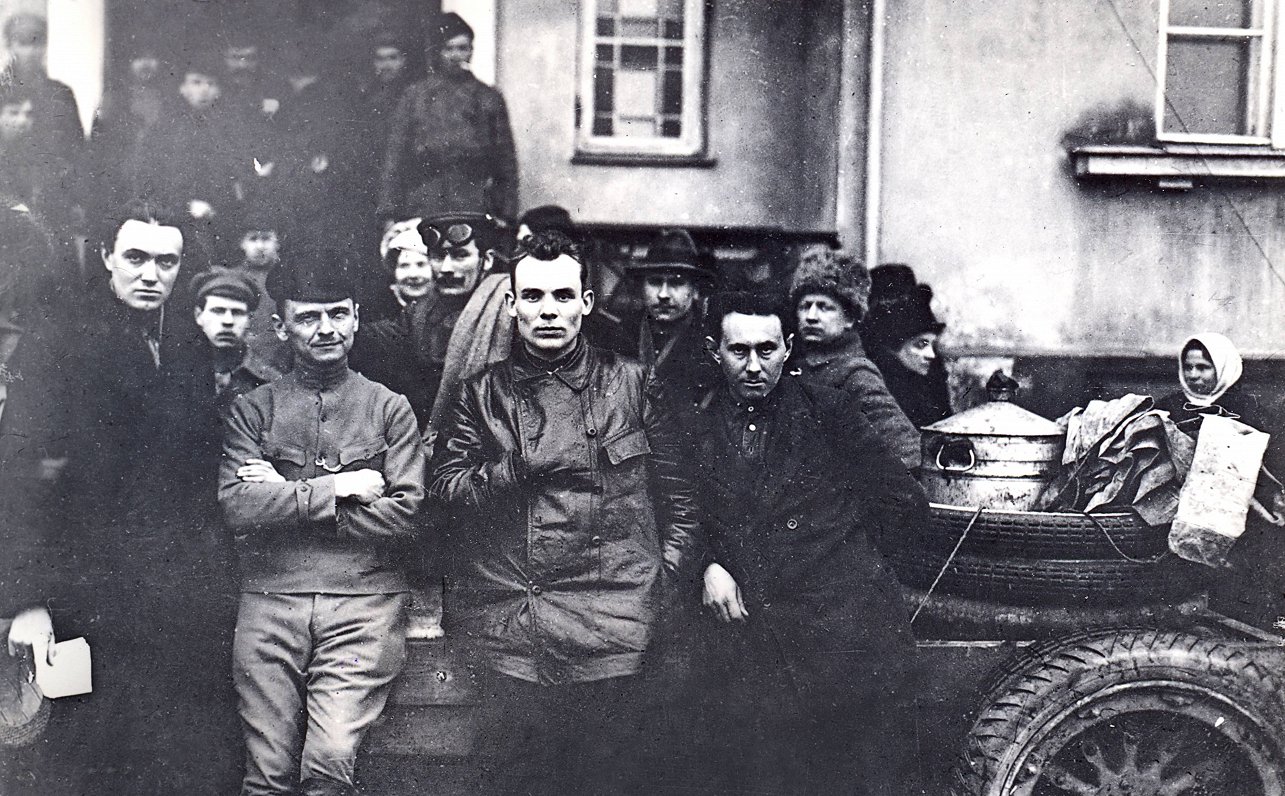
Bolshevik Cheka agents

Nazi SA Stormtroopers
So the ICE troopers that we are seeing on the streets of Minneapolis and other major American cities do not resemble an American Gestapo nor an SA nor a Cheka nor a NKVD. Instead, given their masked total anonymity, they are actually far more fearsomely garbed.
Indeed, I think that the inspiration for their outfits may have come less from our history books than from the fertile imaginations of Hollywood screenwriters.
Over the decades there have been many films and television shows depicting the horrors of some future fascist American regime, and the dreaded security forces that it deployed to crush all resistance. I think that in some cases these latter were portrayed as masked, militarized commandos, wearing outfits that were deliberately intended to terrorize their helpless civilian victims, and that seems to have been the model for ICE.
So the masked federal ICE troopers now patrolling the streets of our cities, snatching terrified college students into their unmarked vans, and smashing open front doors without judicial warrants represent a cartoonishly exaggerated version of what liberals had always imagined an American fascist state would look like. What we are seeing almost seems based upon the script of some over-the-top leftist propaganda-film but instead actually taking place in real life.
- Say Goodbye to the Second Amendment—and Most of the Others as Well!
Ron Unz • The Unz Review • February 2, 2026 • 5,700 Words
Immigration Enforcement or Other Goals?
From the earliest deployment of ICE troopers just weeks after Trump took office, there had been a fierce debate on the right over the true intent of that organization.
Most conservatives approved of its activities as fulfilling Trump’s campaign promises to round up and deport millions of illegal immigrants, but some harder-core right-wingers such as Anglin and Striker were deeply suspicious. They noted that it was absurdly inefficient for teams of ICE agents to stage raids, batter down doors, or otherwise seize illegals one by one, and that no significant numbers could possibly be caught and deported using such methods.
Instead, they argued that ICE agents were merely gaining experience in such brutal, extra-constitutional methods of law enforcement, while ordinary citizens were becoming accustomed to seeing terrified victims snatched off the streets by masked government agents and hustled into unmarked vans. Once this process was complete, ICE could then be deployed against American citizens for entirely different purposes, perhaps as a federal police force to suppress antisemitism.
In support of that second possibility, the first widespread use of ICE had been against entirely legal residents who had criticized Israel.
So the debate continued over whether immigration enforcement was actually a central goal of the Trump Administration or merely an excuse for justifying far more nefarious political plans. However, a long article in the Saturday New York Times may now have tipped the balance on that question.
During his second term, Trump has become notorious for issuing executive orders that blatantly violated existing laws, constitutional provisions, and Supreme Court decisions, greatly aggrandizing his presidential power at the expense of the other two branches of our government. But although Trump has employed these extra-constitutional methods far more than any of his predecessors, he is hardly the first president to have issued such unilateral, extra-legal edicts.
After Haiti was struck by a large earthquake in January 2010, the Obama Administration immediately granted “Temporary Protected Status (TPS)” to the hundreds of thousands of Haitians illegally residing in our country, banning their deportation. This was justified by “the extraordinary and temporary conditions” produced by that large natural disaster. But this TPS status blocking deportation remained in place for more than 16 years, obviously long after the direct effects of the earthquake had dissipated.
Then on June 25th the Supreme Court finally ruled against the continuation of such TPS status, which formally ended for the Haitians on July 27th, allowing some 350,000 of them to be returned to their homeland. According to the Times article, all their addresses were currently on file, making their removal to Haiti an easy project. Yet as prominent Trump supporters angrily declared, nothing had actually been done:
“The airplanes and the buses should have been ready,” said Stephen K. Bannon, a MAGA podcaster and former senior aide to Mr. Trump. “One hundred percent of the Haitians should have already left the country. It’s unacceptable they’re not.”
So instead of 350,000 deportations, a total of just 50 illegal Haitians have been called into immigration offices and outfitted with ankle monitors while the Trump Administration decided whether or not they will be allowed to remain in America.
Under such circumstances, I find it very difficult to believe that the true goal of the creation of a massive, militarized federal force of masked ICE troopers has been immigration enforcement. Instead, the great expertise they have gained in brutal raids and street abductions seems intended for far darker purposes.
This situation has an interesting historical analogy.
During Bush’s 2004 reelection campaign, one of his top issues was his crusade against Gay Marriage, and the Republicans actually put anti-Gay Marriage initiatives on more than a dozen state ballots in order to drive up conservative turnout. Since the race was close, Bush probably would have lost otherwise.
But once Bush was reelected, he totally abandoned Gay Marriage since neither he nor anyone else in his circle apparently cared much about it. Instead, his top priority became privatizing Social Security, a proposal that he’d almost never mentioned in his reelection campaign. Such bait-and-switch strategies are quite common in political campaigns,
Similarly, when Trump was running in 2024, he focused upon the hundreds of thousands of Haitians illegally in America whom he claimed were eating pet dogs and cats, which may or may not have been true. Pet-eating Haitian illegal immigrants were very unpopular among American voters, so JD Vance and many of Trump’s supporters also emphasized that issue. Given that the election was close, Trump might have lost without it.
But now that he’s back in the White House, his administration seems to have absolutely no interest in sending those hundreds of thousands of Haitians back to Haiti, whether or not American dogs and cats might be in danger.
The Transformation of the USA into the USSA
During the long Cold War that dominated much of the twentieth century, the USA and the USSR stood as the great rival superpowers, champions of radically different ideological systems.
Today, America and Russia are still major global rivals, but during the 35 years since the collapse of the Soviet Union their ideological trajectories have moved in unexpected directions.
Although it has a significant Muslim minority, Russia is an unabashed Christian nation, with President Vladimir Putin and other political leaders publicly embracing that traditional Russian religion.
But although a much larger percentage of America’s population has Christian roots, that religion plays no official role whatsoever in our government or our society. Indeed, many recent government policies are absolutely antithetical to those religious traditions. This unusual situation is extremely uncommon outside the West and seems oddly reminiscent of how Russian society had fared during its many decades under the Communist yoke.
So in that matter at least, the USA and the USSR have strangely shifted their ideological positions over time, somehow even passing each other while moving in opposite directions.
Once we begin to consider that notion, we actually see that it applies to quite a number of other matters as well.
During the Cold War, Alexander Solzhenitsyn and his works were harshly vilified in his Russian homeland and tremendously lauded in America. But these days, he is treated as an honored national figure in Putin’s Russia but has been reduced almost to the status of an unperson in our own country, with his final two-volume work 200 Years Together not yet officially published in English after almost a quarter-century.
The increasingly obvious Sovietization of American society has often been in my own thoughts over the last couple of decades, and many others have certainly noticed these same signs.
For example, two weeks ago MAGA military analyst Brandon Weichert discussed that pattern in an interview. He noted that the USA had become very much like the old USSR in its extreme dishonesty and its strictly ideological approach to international relations, the difference being that our country now promoted Global Zionism rather than International Bolshevism. So perhaps Biden was our Chernenko while Trump seemed a mixture of Gorbachev and Yeltsin.
As a former career military officer, Lt. Col. Daniel Davis recently expressed some similar sentiments. He lamented how our country had gradually come to behave in such remarkably bloodthirsty fashion, operating in total violation of all the established laws of warfare and our own national tradition. This shift had largely taken place in the quarter-century since the 9/11 Attacks of 2001.
When we compare the Soviet Union under the early Bolshevik rule and then under Stalin with what it later became during the 1960s and afterward, we see a very similar transformation but in the opposite direction. This applied both to foreign and domestic policies.
Handing out long prison sentences for telling a simple joke was all too common during the 1930s and 1940s but had become completely unimaginable by the 1970s and 1980s.
Irrational, ideologically-driven economic policies cost the lives of many millions of Soviets during that earlier period but could never have been carried out in the latter one.
By the mid-1980s, more and more Soviets recognized that their existing economic system made absolutely no logical sense, and since it apparently served no useful purpose they finally decided to abandon it.
It may not be coincidental that this dramatic shift from fervent ideological commitment to a more practical approach took place at the same time as the ethnic composition of the Soviet government underwent major changes. For a mixture of cultural and genetic reasons, different ethnic groups behave in different ways.
The early Bolshevik regime was overwhelmingly Jewish and the top leadership still remained very heavily Jewish under Stalin. But by the end of Stalin’s reign and certainly by the 1960s, Jews held few if any leadership positions and this remained the case until the end of the USSR. Yuri Andropov may or may not have been part-Jewish by ancestry, but if so, he was one of the very rare exceptions.
This same pattern of ethnic and ideological transformation applied to most of the Communist governments of the Warsaw Pact countries that the USSR had established in the aftermath of World War II. Heavily Jewish governments filled with ideological fervor implemented extreme policies but they were gradually succeeded by Gentile governments that took a more relaxed and practical approach to domestic economic and political matters.
Meanwhile, in recent decades the American government has undergone exactly opposite trends both in its ethnic composition and its ideological tendencies.

The administration of George W. Bush had almost no Jews in senior positions. But in the aftermath of the 9/11 Attacks the many Jewish Neocons situated just below Cabinet rank gained effective control of the administration and its foreign policy, assisted by similar individuals near the top of the Washington political and media ecosphere. This resulted in the disastrous Iraq War and many other policies along similar lines. These important facts were presented by John Mearsheimer and Stephen Walt in The Israel Lobby and U.S. Foreign Policy published in 2007 and by Stephen J. Sniegoski in The Transparent Cabal published the following year.
Although the 2008 victory of Barack Obama was widely perceived as a total repudiation of Bush policies, his chief of staff was Rahm Emanuel. The latter came from a fervently right-wing Zionist family background and had even served as a civilian volunteer for the Israeli IDF while never having any association with the American military. So in some respects, the Obama Administration was even more heavily under direct Jewish and Zionist influence than that of Bush.
When Donald Trump unexpectedly reached the White House in 2016, his Cabinet had relatively few Jews in top-level positions. But two of his most important national security officials were Mike Pompeo and John Bolton, both Neocons very closely aligned with the Jewish groups who dominated that ideological camp and with the Israeli government of Benjamin Netanyahu. Probably even more important was the enormous influence of Trump’s Jewish son-in-law Jared Kushner, whose family had spent decades so close to Netanyahu that the Israeli leader had stayed at their home when he visited America.
The Joseph Biden Administration that replaced Trump in 2020 was certainly the most heavily Jewish in American history, with an overwhelming majority of the top-level positions held by Jews. Secretary of State Antony Blinken had especially strong Zionist roots, with high-ranking Israeli leaders having been frequent guests at his family’s home.
Finally, the second Trump administration reverted back to the previous pattern of having few Jews in top-level positions while probably being under heavier Jewish and Zionist influence than any previous administration in American history.
Chief of staff Susie Wiles had previously worked for Netanyahu and her Jewish subordinate Stephen Miller was one of Trump’s most influential advisors in both foreign and domestic policy. Top national security officials such as Secretary of State Marco Rubio and CIA Director John Ratcliffe had built their entire political careers upon backing from the Israel Lobby, while Deputy Defense Secretary Stephen Feinberg likely ran that enormous department rather than his ignorant nominal superior Pete Hegseth. Trump himself seemed very heavily under the influence of Jared Kushner, Steve Witkoff, and Netanyahu himself, as well as his largest mega-donors such as Israeli citizen Miriam Adelson, born in Tel Aviv.
Thus, the trajectory of Jewish and Zionist influence at the top of the American government has been steadily and even rapidly increasing over the last quarter century. This may have been an important factor in the transformation of the USA of a generation or two ago into what might be best described as the USSA of today.
In one of my 2018 articles I discussed this ethnic situation in general terms:
These important examples may help to explain the puzzling contrast between the behavior of Jews in the aggregate and Jews as individuals. Observers have noticed that even fairly small Jewish minorities may often have a major impact upon the far larger societies that host them. But on the other hand, in my experience at least, a large majority of individual Jews do not seem all that different in their personalities or behavior than their non-Jewish counterparts. So how does a community whose individual mean is not so unusual generate what seems to be such a striking difference in collective behavior? I think the answer may involve the existence of information choke-points, and the role of relatively small numbers of particularly zealous and agitated Jews in influencing and controlling these…
Furthermore, this situation is exacerbated by the common tendency of Jews to “cluster” together, perhaps representing just one or two percent of the total population, but often constituting 20% or 40% or 60% of their immediate peer-group, especially in certain professions. Under such conditions, the ideas or emotional agitation of some Jews probably permeates others around them, often provoking additional waves of indignation.
As a rough analogy, a small quantity of uranium is relatively inert and harmless, and entirely so if distributed within low-density ore. But if a significant quantity of weapons-grade uranium is sufficiently compressed, then the neutrons released by fissioning atoms will quickly cause additional atoms to undergo fission, with the ultimate result of that critical chain-reaction being a nuclear explosion. In similar fashion, even a highly agitated Jew may have no negative impact, but if the collection of such agitated Jews becomes too numerous and clusters together too closely, they may work each other into a terrible frenzy, perhaps with disastrous consequences both for themselves and for their larger society. This is especially true if those agitated Jews begin to dominate certain key nodes of top-level control, such as the central political or media organs of a society.
