When headlines announced that
the U.S. childhood vaccine schedule had been “reduced” from 17 routine
vaccines to 11, many people felt relief. After years of rising injuries,
declining trust, and unanswered safety questions, it sounded like the
system was finally responding.
It wasn’t.
What changed was not
the substance of the program — only its presentation. And what this
so-called reform carefully preserves tells us everything about what it
was actually designed to do.
⸻
Start With the Reality, Not the Spin
Despite celebratory language, here is what did not happen: • No vaccine was removed • No vaccine was banned • No vaccine was paused • No vaccine lost insurance coverage • No mandate was repealed • No penalties for refusal were eliminated • No manufacturer liability was restored
Children are still exposed to the same products.
Parents are still coerced through schools, childcare, and insurance systems.
Doctors are still bound to CDC-aligned “standards of care.”
Calling this a “reduction” is misleading. Nothing was reduced in real life. The products were simply reclassified on paper.
⸻
Reclassification Is Not Reform
Several vaccines were moved
into a category now described as “shared clinical decision-making.”
This language sounds empowering — until you look at what actually
changes for families.
Parents still face: • school and daycare exclusion • dismissal from pediatric practices • medical record flagging • insurance pressure Doctors still face: • licensing risk • professional discipline • malpractice exposure if they deviate from institutional guidance
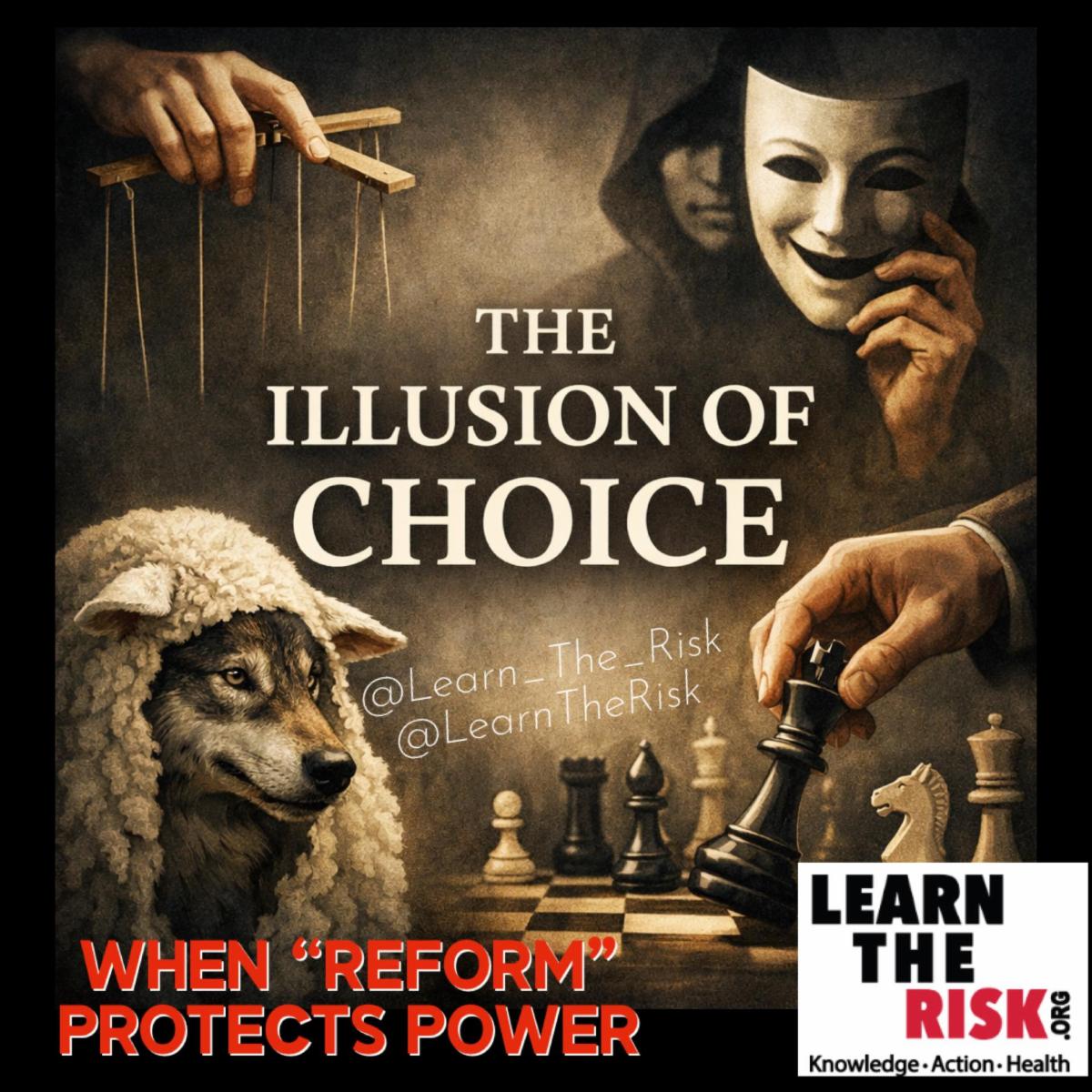
Consent without the ability to refuse without consequence is not consent. It is compliance dressed up as choice.
A coercive system does not become ethical simply because it uses softer words.
⸻
The Most Protected Products Were Left Untouched — Intentionally
Notice which vaccines remain recommended for all children: • MMR • DTaP • Polio • Hib • Pneumococcal • HPV • Varicella
These are the most politically protected, most litigated, and most financially entrenched products on the entire schedule.
If safety were the priority, scrutiny would start here.
Instead, these vaccines were deliberately
insulated — because questioning them would destabilize the entire
program. That decision alone reveals that this reform was never about
safety. It was about preserving the structure.
⸻
Admissions Without Action Are Narrative Laundering
The announcement openly admits several damning facts: • Long-term safety data are limited • Placebo-controlled trials are rare • The cumulative childhood schedule has never been comprehensively evaluated These are not minor gaps. They are foundational failures. Yet none of these admissions led to: • a pause • a moratorium • a rollback • a suspension of mandates
Instead, injections continue uninterrupted while institutions promise to “study it later.”
If a product lacked basic safety evaluation in any other area of medicine, use would stop first. Here, exposure continues — and only the narrative changes.
⸻
What Real Reform Would Actually Require
Real reform would not involve reclassification
or trust-building language. It would require stopping and answering the
most basic safety questions before continued use.
That would include: •
Evaluating the cumulative childhood vaccine schedule as a whole —
against a true placebo, not against another vaccine or adjuvant, before
continued use. •
Testing vaccines for carcinogenic potential, something manufacturers
explicitly acknowledge they do not do. Section 13.1 of vaccine package
inserts states that vaccines have not been evaluated for
carcinogenicity, mutagenicity, or impairment of fertility.
These are not radical demands. They are baseline safety standards everywhere else.
Yet despite openly acknowledging these gaps, the system continues to mandate use — while shielding manufacturers from liability.
That is not science.
That is institutional protection.
⸻
So What Did the “Reduction to 11” Actually Accomplish?
It accomplished this: • lowered public resistance • gave the appearance of responsiveness • reframed coercion as “choice” • restored institutional credibility • kept enforcement mechanisms intact
This was not reform.
It was pressure management.
⸻
Why It Matters That Children’s Health Defense Framed This as a Win
At this point, it becomes impossible to ignore who presented this change as historic progress.
The article celebrating this shift was published by Children’s Health Defense.
This does not contradict what’s happening — it confirms it.
Controlled opposition is not defined by intent or branding. It is defined by where criticism stops.
CHD is allowed to: • criticize transparency • highlight data gaps • discuss declining trust • call for future studies But it stops short of: • demanding a halt • challenging mandates as unethical • calling liability immunity unacceptable • naming systemic harm • calling for dismantling the program
The article praises the
restructuring, legitimizes the framework, and reassures readers that
trust is being rebuilt — all while the same institutions retain
authority, the same mandates remain enforceable, and the same dangerous
products continue to be injected.
That is not opposition.
That is containment.
Controlled opposition does not silence dissent. It keeps dissent safely inside boundaries that protect the system.
⸻
The Bottom Line
Nothing meaningful was reduced.
Nothing foundational was challenged.
Nothing coercive was removed.
The “reduction to 11” preserves the program while calming the public.
Real reform would change power.
This reform preserves it.
Once you see that, the illusion collapses — and it doesn’t come back. | 
No comments:
Post a Comment