Monday, August 3, 2015

Top ten memorable quotes from the 'missile man'

Born in 1931 in Rameswaram, Tamil Nadu, Dr Abdul Kalam was an Indian scientist who served as the 11th President of India from 2002 to 2007.

He spent more than 40 years as a scientist and science administrator, mainly at the Defence Research and Development Organisation (DRDO) and Indian Space Research Organisation (ISRO) and was intimately involved in the India's civilian space programme and military missile development efforts.

He came to be known as India’s Missile Man for his work on the development of ballistic missiles and launch vehicle technology, and played a critical role in India’s Pokhran-II nuclear tests in 1998.

He received several prestigious awards, including the Bharat Ratna, India's highest civilian honour.

A.P.J. Abdul Kalam, who rose from humble beginnings to become one of India's leading scientists and later a hugely popular president, died in Shillong following a cardiac arrest during a lecture at the Indian Institute of Management at around 6.30pm on July 29, 2015. He was 84.

He will be remembered for his 10 most memorable sayings:


1) 'All Birds find shelter during a rain. But Eagle avoids rain by flying above the Clouds.'

2) 'When your hopes and dreams and goals are dashed, search among the wreckage, you may find a golden opportunity hidden in the ruins.'

3) 'If you want to shine like a sun. First burn like a sun.'

4) 'It is very easy to defeat someone, but it is very hard to win someone.'

5) 'Dream is not that which you see while sleeping it is something that does not let you sleep.'

6) 'Thinking should become your capital asset, no matter whatever ups and downs you come across in your life.'

7) 'If a country is to be corruption free and become a nation of beautiful minds, I strongly feel there are three key societal members who can make a difference. They are the father, the mother and the teacher.'

8) 'Learning gives creativity, Creativity leads to thinking, Thinking provides knowledge and Knowledge makes you great.'

9) 'Without your involvement you can't succeed. With your involvement you can't fail.'

10) 'Don’t take rest after your first victory because if you fail in second, more lips are waiting to say that your first victory was just luck.'

Saturday, August 1, 2015

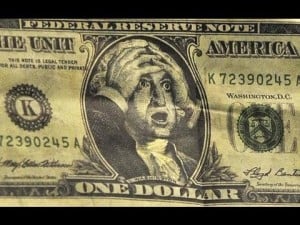
“De-dollarizing” strategy worries Uncle Sam!

Nobody enjoys the milk & honey forever; what goes up must come down...

Russia is about to take another major step towards liberating the Ruble from the Dollar System. Its Finance Ministry just revealed it is considering issuing Russian state debt in Chinese Yuan. That would be an elegant way to decouple from the dependence and blackmail pressures from the US Treasury financial terrorism operations while at the same time strengthening the bonds between China and Russia–Washington’s worst geopolitical nightmare.
Economic-US-DollarRussian Deputy Minister of Finance, Sergei Storchak, announced that his ministry is making a careful study of what would be required to issue Russian bonds denominated in Chinese Yuan. The latest news is part of a long-term strategy between Russia and China that goes at the heart of American hegemony—the role of the dollar as the leading world central bank reserve currency.
The dollar is used in some 60% of central bank reserves today. The second largest is the Euro. Now clearly China is carefully moving, as the world’s largest trading nation, to create its Renminbi or Chinese Yuan as another major reserve currency. That has huge geopolitical implications. So long as the US dollar is the leading reserve currency, the world must de facto buy US dollar Treasury bonds for its reserves. That has allowed Washington to have budget deficits since 1971 when the dollar left the gold exchange standard. In effect, China, Japan, Russia, Germany—all trade surplus countries, finance Washington’s deficits that allow her to make wars around the world. It is a paradox that Russia and China at least, are determined to end as soon as possible.
Last year Russia and China signed enormous 30-year energy deals for delivery of Russian oil and gas to China. The payments will be in local currencies not in dollars. Already in 2014 settlement in national currencies between China and Russia in bilateral trade increased nine times over 2013. Lin Zhi, head of the Europe and Central Asia Department of the Chinese Ministry of Economic Development announced last November that, “About 100 Russian commercial banks are now opening corresponding accounts for settlements in yuan. The list of commercial banks where ordinary depositors can open an account in yuan is also growing.” Last November 18 Russia’s largest bank, Sberbank became the first Russian bank to begin financing letters of credit in Chinese yuan.
Long-term strategy
What all this indicates is that Russia and China are carefully planning a long-term strategy of getting out from dependence on the US currency, something that, as the US sanctions last year revealed, make both countries vulnerable to US currency wars of devastating impact.
China has just been accepted “in principle” by the Group of 7 finance ministers to have its yuan included in the International Monetary Fund basket of currencies making up IMF Special Drawing Rights. Today only US dollar, Euro and Japanese Yen are included in the basket. Including the yuan would be a huge step towards making the yuan a recognized international reserve currency, and at the same time would weaken the dollar share.
China’s foreign reserves consist overwhelmingly of US dollar claims, mainly US Treasury bonds, which is a strategic weakness, because in case of war these can be frozen, as Iran knows too well. It is imperative for China to increase the gold content of the reserves and to diversify the rest into other currencies.
China has also agreed with Russia to unify the new Silk Road high-speed rail project with Russia and Russia’s Eurasian Economic Union. At the same time Beijing has announced it is creating a huge $16 billion fund to develop gold mines along the rail route linking Russia and China and Central Asia. That suggests plans to greatly build up gold as central bank reserve share. China’s central bank has greatly increased its gold holdings in recent years, though whether it is now greater than the alleged Federal Reserve gold holdings of 8000 tons is not yet public. It is expected China must reveal its gold reserves on being formally accepted into the IMF SDR basket perhaps later this year.
Last year, 2014, Song Xin, president of the China Gold Association stated, “We need to establish our gold bank as soon as possible…It can further help us acquire reserves and give us more say and control in the gold market.” A gold sector fund involving countries along the Silk Road has been set up in northwest China’s Xi’an City this May, led by Shanghai Gold Exchange (SGE), part of China’s national bank, PBOC. China is the world’s largest gold producer. Among the 65 countries along the routes of the Silk Road Economic Belt, there are numerous Asian countries identified as important reserve bases and consumers of gold. Xinhua reports that 60 countries have invested in the fund, which will facilitate central banks of member states to increase their holdings of gold.
Dr. Diedrick Goedhuys, former economic adviser to the Reserve Bank of South Africa in an interview told me, “I want to emphasize the unique quality of gold, when viewed as a financial asset, of being an asset that is no-one’s liability. A treasury bond, for instance, is an asset in my hands, but a liability, or debt to be repaid, in the books of the treasury. Gold is a pure asset. The Chinese gold mining plan is of vast importance. It’s a long-term plan; it may take ten years before it has a significant effect.”
Now with Washington and Wall Street increasingly frustrated at how to weaken the Ruble and China’s Renminbi, those two powers are making giant strides to break free from their dollar chains, a move that could liberate much of mankind if done in a good way.

F. William Engdahlis strategic risk consultant and lecturer, he holds a degree in politics from Princeton University and is a best-selling author on oil and geopolitics, exclusively for the online magazine “New Eastern Outlook”.
First appeared:http://journal-neo.org/2015/06/06/russia-gets-very-serious-on-de-dollarizing/

The MH 17 Crash: The Unanswered Questions

more facts and figures to be added later...

The MH 17 Crash: The Unanswered Questions


Western media sources were quick to point the finger at “Russian-backed rebels” operating in Eastern Ukraine, operating a “Russian missile system” to down the Malaysian Airlines flight MH 17 in July 2014. Even the name of Russia’s President was invoked…all without a shred of evidence one year on. Here are some questions to be answered.
1. To make an accusation, you need proof. Without the proof, the accusation amounts to slander or libel. The official enquiry has not yet delivered any hard evidence pointing towards Russia’s involvement in the incident, either passively or actively. Therefore are accusations to the contrary, without evidence to back them up, simply examples of slander and libel levelled by those who have lied time and time and time and time and time again?
2. OCSE monitor Michael Bociurkiw in an interview shortly after the incident on July 17 that there are two or three pieces of fuselage which show indications of heavy machine-gun fire and no evidence of missile damage. How to explain this?
MH 17: The unanswered questions. 55907.jpeg

3. The same monitor declared later that certain pieces of the fuselage looked different a few days after he had first seen them. On July 22, he stated to the BBC that certain sections of the fuselage “do look different than when we first saw them”. Was the wreckage tampered with?
4. What about the eye-witness reports of two Ukrainian Air Force fighter jets trailing the plane at the time of the incident?
Impact holes do not match BUK M1 missile
5. How to explain the circular holes bend inwards at impact, when such holes are made by bullets from machine-gun fire? Shrapnel from a BUK missile system would have caused tears in the fuselage more of a triangular shape and would not have concentrated on and targeted the cockpit specifically. Furthermore, fuselage sections on another part of the aircraft have outward-bent impact marks, showing that the MH-17 was being fired at from two different directions.
6. The caliber of the round bullet holes is from a 30-mm. cannon. If the aircraft was downed by a surface-to-air missile, then how could this produce bullet holes from a machine-gun?
7. The fuselage has other marks besides those of machine-gin fire. Was the aircraft hit by an air-to-air missile as well as machine-gun fire from two different sides from the two aircraft said to be trailing it at the time of impact?
8. Why have fragments of information disclaiming the western theory that pro-Russian or Russian-backed rebels were responsible disappeared from the Internet? Why have Facebook accounts showing such evidence been closed down? Why have blog sites carrying evidence disclaiming the western theory been hacked? Why do stories such as these attract an army of Internet trolls making ad hominem attacks against the author, sending threatening emails to her/his email account and vehemently shrieking abuse and lies without discussing any of the points in question?
9. If a guided missile launched by a BUK-M1 Surface to Air Missile battery leaves a comet-like plume of smoke behind it, and given that no such plume was seen at the time of impact against MH 17, during daylight, would this not point towards the fact that the object responsible for the incident was not, in fact, a BUK missile system?
Turn on your microphones, copy and paste this link into a fresh browser window and watch this:
https://www.youtube.com/watch?v=NPtDy18Nk5I
10. If the impact holes on the aircraft show impact from below and sideways, then how does this implicate a BUK missile system, which strikes the target from above?
11. Looking at the video, how can a complex system costing millions and involving different control vehicles be operated by “rebels”?
Aircraft seen trailing MH-17
12. How to explain that eye witnesses saw aircraft trailing MH17, and then shots, without any missile trail, just before the aircraft exploded?
13. Is there any credence in the theory that President Putin was believed to be flying over the same route at the time? Malaysia Airlines confirms  “A flight from a different carrier was on the same route at the time of the MH17 incident”. Sources who have asked not to be named have claimed that the Russian President’s aircraft has very similar contours and coloring to MH17 and that both aircraft intersected at the same point and altitude at a similar time. It was 200 miles behind MH 17. In the event it did not fly over Ukraine, but the trajectory could have fooled those who wanted to murder President Putin?
14. And how to make sense of this? Kiev’s wrath against anti-Kiev commander Bes was well known. Bes operated precisely in the area of the downed jetliner. Then there was the video tape of a supposed conversation between him and subordinates, uploaded five hours after the crash but placing the time of the crash 35 minutes before it actually took place. The log of the video shows it was made on July 16, so one day before the incident took place? Fabricated false flag “evidence”?
15. The video of a recorded conversation between a Ukrainian military pilot and command flying in the area at the same time regarding a downed aircraft has since disappeared from the Net. Why?
Anti-Fascist forces did not have equipment or know-how
16. The BUK M-1 is a sophisticated piece of weaponry that can only be operated by a team of experts, involving training for months. Such personnel know the difference between a civilian and a military aircraft. Coupled with this, the anti-Kiev freedom fighters in the area possess missile systems that do not operate over 10,000 feet. The MH-17 was flying at 33,000 feet.
17. Why was the aircraft flying over a war zone, where ten aircraft had been downed recently?
18. Why does the downed aircraft show cladding damage characteristic with pin and shrapnel warheads (air-to-air systems), much more characteristic of R-27 TOPOR or R-73 missiles used on the Ukraine military MIG-29 and SU-27 aircraft?
19. One year on, where is the official report? Does it really take that long to doctor the evidence?
20. Given the recent history of geopolitical events and given the following, would anyone put any of the questions raised above beyond NATO in general and the FUKUS Axis (France-UK-US) in particular?

Timothy Bancroft-Hinchey
Pravda.Ru  
(timothy.hinchey@gmail.com)

Timothy Bancroft-Hinchey has worked as a correspondent, journalist, deputy editor, editor, chief editor, director, project manager, executive director, partner and owner of printed and online daily, weekly, monthly and yearly publications, TV stations and media groups printed, aired and distributed in Angola, Brazil, Cape Verde, East Timor, Guinea-Bissau, Portugal, Mozambique and São Tomé and Principe Isles; the Russian Foreign Ministry publication Dialog and the Cuban Foreign Ministry Official Publications. He has spent the last two decades in humanitarian projects, connecting communities, working to document and catalog disappearing languages, cultures, traditions, working to network with the LGBT communities helping to set up shelters for abused or frightened victims and as Media Partner with UN Women, working to foster the UN Women project to fight against gender violence and to strive for an end to sexism, racism and homophobia. He is also a Media Partner of Humane Society International, fighting for animal rights.

Friday, July 31, 2015

Various uses of lemons and limes...


What are the differences between lemons and lines? Different colors & prices?

Multi-colored lemons


Can make a battery cell
Can turn it into a slow-moving car
A fast-moving lemonoid car
A lemonoid human face
Health benefits of lemon
Health benefits of lemon oil
Organic Kafir Limes
Now is there any such thing as an organic or inorganic Mu'min Lime?

Eid-ul-Fitr Celebration 2015

Almost all religious observations end with celebrations and festivities and. of course, mouth-watering food...


Empire State Building illuminated green on the day of Eid
Mumbai Terminus Building illuminated green on the day of Eid


Thursday, July 9, 2015

Feasting, wasting & shopping take over fasting in Ramadan!

Muslims take more food in Ramadan than any other month...
And they indulge in shopping spree too!


The month of fasting has become the month of food
July 02, 2015
Samar Yahya
Saudi Gazette

Fasting is a common form of worship among various cultures. Its spiritual benefits are widely recognized even with the diversity in the frequency, practice, and duration of the fast from one religion to another.

Fasting is the fourth pillar of Islam.

The following verse in the Holy Qur’an explains one of the main purposes of fasting Ramadan; and that is to attain taqwah, piety.   {O you who have believed, decreed upon you is fasting as it was decreed upon those before you that you may become righteous.}  (Chapter 2, verse 183)


The month of Ramadan is special and distinctive for all Muslims. It is a spiritual regime and a reorientation for the body and mind. It is a time for spiritual reflection, prayer, and good deeds.

In addition to the recognized physical benefits of fasting, its spiritual dimensions purify the soul and instill self-reflection.

On the physical level, the body uses up glucose and then starts to burn fat which lead to weight loss.

After a few days of the fast, higher levels of endorphins (hormone that enhances the mood) appear in the blood and can make a person more alert and give an overall feeling of general mental wellbeing.

The voluntary night prayers after Ishaa prayer, the Taraweeh prayers are another of the well-known routines of the holy month of Ramadan and one of the ways Muslims become re-connected to the Holy Qur’an. Over the course of the month, the entire Qur’an is commonly recited in Taraweeh prayers. This is an opportunity for Muslims to become spiritually connected to Allah and reflect on His words of guidance.

Unfortunately, it is evident that many Muslims are falling short on reaping the spiritual benefits during Ramadan, and they are not increasing their connection to the Qur’an and other forms of worship. Many Muslims nowadays consider Ramadan as the month of excessive cooking and eating and that is why food prices usually go up during Ramadan. Food consumption tends to rise despite fasting. Food prices usually go high before the holy month begins and continue to rise.

The Consumer Protection Association noted that food waste in Saudi Arabia and the Gulf region increase by 50% to 70% during Ramadan.

Though one of the main core goals of fasting Ramadan is to feel the pain of hunger and reaching out to know the state of poor and how they suffer during the year, surprisingly people are overeating in Ramadan and gaining weight.

Some people have forgotten the main goal of Ramadan and its true perspective and that is why food prices soar during the month of fasting due to the high demand for diverse foods and beverages.

Consumers always complain that traders raise prices especially for nuts, sweets, and dates and they attribute this rise to the increase in demand.
According to an economic expert, food consumption rates go up by 150% in Ramadan; meaning that they use food that would normally be sufficient for three months during.


A usual scene is always seen before the beginning of Ramadan, hypermarkets are always crowded with people stocking up with supplies for the month. Supermarket trolleys are over loaded with all sorts of food: rice, pasta, cans of this and that, dessert boxes, sambosa dough, fruits, custard, crème caramel, pudding, and much more. You can also spot some families pushing along more than one trolley.

Hypermarkets have special offers and promotions available only during Ramadan. This scene arouses an important question: isn’t Ramadan the month of fasting? Isn’t it the month in which we should feel what the poor feel?

Ramadan is the highest month for restaurants. Hotels and restaurants prepare special menus for iftar and suhoor with high prices and no one can blame them as long as they have keen guests who even make early bookings to make sure that they have a reserved place.

According to World Food Program (WFP) hunger kills more people every year than AIDS, malaria and tuberculosis combined. Some 795 million people in the world do not have enough food to lead a healthy, active life. We not only have excess food consumption, but we have an excess waste of food too. With all that extra buying and hording of food, the result is an enormous amount of food gets dumped.

An earlier study conducted by King Saud University reports that 30% of the four million dishes prepared during Ramadan will be discarded without even being eaten. This totals to a cost of SR 1.2 million.

We need to reverse the transformation of Ramadan into the month of excess food, and bring it back to what it really is: a month of more worship and less food.


===

Why do we waste millions of meals in Ramadan?
Rashid Muhammad Al-Fawzan
Al-Riyadh
July 02, 2015


I would first like to wish everyone Ramadan Kareem. May Allah accept our fasting! Every Ramadan, families spend a lot of money on food. I would like to remind everyone of the importance of moderation when it comes to spending on food during the holy month. We have reached a stage where the amount that we spend and waste has spiraled out of control. I am also talking about the food that is given in charity. It seems that we waste a lot of food when we put up Iftar tents and fill them with food.

Of course, our ultimate objective is to do good deeds. We want to help the needy, but our efforts are often random and disorganized. You can put up a tent and fill it with a large quantity of food, but you cannot determine how many people will come to the tent and break their fasts there. If a small number of people turn up, then what will happen to the uneaten food? Will it be stored and channeled elsewhere?


A few months ago, Al-Riyadh newspaper published a story about food that is wasted. The news items estimated that 12 million meals were wasted every day in Riyadh. This was the reason why Al-Itam Society was formed. Around 30 to 40 percent of the income of Saudi households is spent on consumables. According to Al-Itam Society, if a meal costs SR10, then we waste 120 million meals a day - that is 43.8 billion meals a year. Of course, this is only in Riyadh, what about other cities?

We are a wasteful people. We spend a lot of money on food at home, in restaurants and on Ramadan tents. We must control the tendency to go overboard with our spending, something that can prove to be a heavy burden on some families. Our government spends billions of riyals on subsidized commodities and services. We should, therefore, be careful with our spending.


The habit of stocking our fridges with food contributes to the increasing prices of commodities. Doing charity does not mean wasting huge sums on food that will ultimately end up in the garbage. We should be moderate and try to cut down wastefulness from 30 to 40 percent to 3 to 5 percent.

We must not waste food and spend a lot of money on it. Ramadan is a month for prayers and supplications, not wasting food. Allah says in the Holy Qur’an, “…Eat and drink: But waste not by excess, for Allah loves not the wasters.” (7:31)


Turmoil in Mideast continues even in Ramadan!

The auspicious month of Ramadan fails to bring Muslims to their senses...