Sunday, August 16, 2015

Fragmentation Plan of the Middle East

The Middle East has been in a state of chaos for years now, with each passing year bringing a new wave of instability, carnage and human suffering to the people of the region. From Afghanistan to Iraq, Libya to Syria, Western foreign policy has directly caused or exacerbated much of the chaos we see in the region today and has contributed to a growing trend of instability. A pertinent question of our time however is whether this instability and destabilization is a result of inept strategy by Western nations, or a calculated strategy by the West to intentionally create chaos, balkanize nations and increase sectarian tensions in the region?

Ubiquitous evidence indicates that there is an agenda by at least some strategists within the US to destroy the nation state and balkanize the region into feuding rump states, micro-states and mini-states, which will be so weak and busy fighting each other that they will be unable to unify against foreign colonial powers – most notably Western multinational corporations. After a prolonged period of destruction and chaos in the region, the people of the Middle East may be so weary of the horrors of war that they will accept a Western imposed order as a means of ending the fighting, even though the very same Western forces have been responsible for creating much of the intolerable chaos.
The strategy of balkanization can be traced back to at least the early 1990’s, when British-American historian Bernard Lewis wrote an article published in the 1992 issue of the CFR’s publication, ‘Foreign Affairs’, titled: Rethinking the Middle East. He envisages the potential of the region disintegrating “into a chaos of squabbling, feuding, fighting sects, tribes, regions and parties.” Even though Lewis writes in his article that this is only one “possibility” of many other possibilities, it is starkly similar to the situation that we see in countries such as Iraq and Libya today:
Another possibility, which could even be precipitated by fundamentalism, is what has of late become fashionable to call “Lebanonization.” Most of the states of the Middle East—Egypt is an obvious exception—are of recent and artificial construction and are vulnerable to such a process. If the central power is sufficiently weakened, there is no real civil society to hold the polity together, no real sense of common national identity or overriding allegiance to the nation state.
Lewis continues:
The state then disintegrates—as happened in Lebanon—into a chaos of squabbling, feuding, fighting sects, tribes, regions and parties. If things go badly and central governments falter and collapse, the same could happen, not only in the countries of the existing Middle East, but also in the newly independent Soviet republics, where the artificial frontiers drawn by the former imperial masters left each republic with a mosaic of minorities and claims of one sort or another on or by its neighbours.
Speaking at the Ford School in 2013, former US secretary of state and CFR member, Henry Kissinger, reveals his desire to see Syria balkanized into “more or less autonomous regions”, in addition to comparing the region to the “Thirty Years War” in Europe:
There are three possible outcomes. An Assad victory. A Sunni victory. Or an outcome in which the various nationalities agree to co-exist together but in more or less autonomous regions, so that they can’t oppress each other. That’s the outcome I would prefer to see. But that’s not the popular view…. I also think Assad ought to go, but I don’t think it’s the key. The key is; it’s like Europe after the Thirty Years War, when the various Christian groups had been killing each other until they finally decided that they had to live together but in separate units. (from 27.35 into the interview).
Creating a “Salafist Principality” in Syria
In May of this year, Judicial Watch released a series of formerly classified documents from the US Department of Defense and Department of State after the watchdog group filed a Freedom of Information Act (FOIA) lawsuit against the two government agencies. One important document contained in the release was a 2012 Defense Intelligence Agency (DIA) report which reveals that the powers supporting the Syrian opposition – “Western countries, the Gulf states and Turkey” – wanted to create a “Salafist principality in Eastern Syria in order to isolate the Syrian regime”:
Opposition forces are trying to control the Eastern areas (Hasaka and Der Zor), adjacent to the Western Iraqi provinces (Mosul and Anbar), in addition to neighbouring Turkish borders. Western countries, the Gulf states and Turkey are supporting these efforts… If the situation unravels there is the possibility of establishing a declared or undeclared Salafist principality in Eastern Syria (Hasaka and Der Zor), and this is exactly what the supporting powers to the opposition want, in order to isolate the Syrian regime, which is considered the strategic depth of the Shia expansion (Iraq and Iran). (p.5)
The document adds:
ISI [the Islamic State of Iraq] could also declare an Islamic State through its union with other terrorist organisations in Iraq and Syria. (p.5)
Balkanizing Iraq
 Fragmenting Iraq into three separate regions has been the goal of many within the US establishment since the 2003 invasion of the country, although NATO member Turkey has vocally opposed the creation of a Kurdish state in the North. In 2006, a potential map of a future Middle East was released by Lieutenant-Colonel Ralph Peters which depicted Iraq divided into three regions: a Sunni Iraq to the West, an Arab Shia State in the East and a Free Kurdistan in the North.
Even though the map does not reflect official Pentagon doctrine, it gives a glimpse into the minds of some of the top military strategists and corroborates with many other Western voices on the strategy for Iraq. As geopolitical analyst Eric Draitser noted in a recent article for New Eastern Outlook, the President Emeritus of the CFR, Leslie Gelb, argued in a 2003 article for the NY Times that the most feasible outcome in Iraq would be a “three-state solution: Kurds in the north, Sunnis in the center and Shiites in the south.”
Syria is shown as still being a unified country in the above map, although this may be because the Syrian proxy war did not begin until years later. Israel could also come to occupy more territory in the coming decades.

Different Country, Same Strategy
The same pattern of balkanization and chaos that we see in Iraq and Syria is also true in Libya. Following the NATO’s 2011 war in the North African nation, the country descended into an abyss of chaos and has essentially been split into three parts, with Cyrenaica comprising the East of the country, and the West split into Tripolitania in the Northwest and Fezzan in the Southwest. Libya is now a failed state which is devoid of central government and is stricken by tribal warfare, where rival militias who were once fighting alongside each other are now battling against one another.
The Iranian nuclear deal could mark a new beginning for Western geopolitical strategy in the Middle East, where they would work with regional powers to promote stability and refrain from military intervention (or intervention through proxies). Let’s hope this is true, and the West will halt the plethora of destabilization programs it has engaged in for years.
But the most probable scenario will be a continuation of the balkanization strategy that we have all come to expect; until a “new local order emerges” – an order that will be designed by, and for, Western interests of course.

Steven MacMillan is an independent writer, researcher, geopolitical analyst and editor of  The Analyst Report, especially for the online magazine “New Eastern Outlook”.

Sunday, August 9, 2015

IS is CIA crafted Frankenstein!

Confirmed once again that IS is the brainchild of CIA to establish various geopolitical advantages in the middle east, weaken the Muslims, bolster security of Israel, divide up Syria and Iraq along various sectarian lines, route gas pipelines from Kuwait, Oman, Qatar & Saudi Arabia overland Syria & Turkey to bring middle eastern gas to Europe to counter Russia -- among other things...

The Rise of the “Islamic State” (ISIL) Was “A Willful Decision” of the Obama White House: Former DIA Chief

Defends Accuracy of 2012 Memo

https://www.youtube.com/watch?v=SG3j8OYKgn4

In Al Jazeera’s latest Head to Head episode, former director of the Defense Intelligence Agency Michael Flynn confirms to Mehdi Hasan that not only had he studied the DIA memo predicting the West’s backing of an Islamic State in Syria when it came across his desk in 2012, but even asserts that the White House’s sponsoring of radical jihadists (that would emerge as ISIL and Nusra) against the Syrian regime was “a willful decision.”
Amazingly, Flynn actually took issue with the way interviewer Mehdi Hasan posed the question—Flynn seemed to want to make it clear that the policies that led to the rise of ISIL were not merely the result of ignorance or looking the other way, but the result of conscious decision making:
Hasan: You are basically saying that even in government at the time you knew these groups were around, you saw this analysis, and you were arguing against it, but who wasn’t listening? Flynn: I think the administration. Hasan: So the administration turned a blind eye to your analysis? Flynn: I don’t know that they turned a blind eye, I think it was a decision. I think it was a willful decision. Hasan: A willful decision to support an insurgency that had Salafists, Al Qaeda and the Muslim Brotherhood? Flynn: It was a willful decision to do what they’re doing.

Hasan himself expresses surprise at Flynn’s frankness during this portion of the interview. While holding up a paper copy of the 2012 DIA report declassified through FOIA, Hasan reads aloud key passages such as, “there is the possibility of establishing a declared or undeclared Salafist principality in Eastern Syria, and this is exactly what the supporting powers to the opposition want, in order to isolate the Syrian regime.”
Rather than downplay the importance of the document and these startling passages, as did the State Department soon after its release, Flynn does the opposite: he confirms that while acting DIA chief he “paid very close attention” to this report in particular and later adds that “the intelligence was very clear.”
Lt. Gen. Flynn, speaking safely from retirement, is the highest ranking intelligence official to go on record saying the United States and other state sponsors of rebels in Syria knowingly gave political backing and shipped weapons to Al-Qaeda in order to put pressure on the Syrian regime:
Hasan: In 2012 the U.S. was helping coordinate arms transfers to those same groups [Salafists, Muslim Brotherhood, Al Qaeda in Iraq], why did you not stop that if you’re worried about the rise of quote-unquote Islamic extremists?
Flynn: I hate to say it’s not my job…but that…my job was to…was to to ensure that the accuracy of our intelligence that was being presented was as good as it could be.
The early reporting that treated the DIA memo as newsworthy and hugely revelatory was criticized and even mocked by some experts, as well as outlets like The Daily Beast. Yet the very DIA director at the time the memo was drafted and circulated widely now unambiguously confirms the document to be of high value, and indicates that it served as source material in his own discussions over Syria policy with the White House.
As Michael Flynn also previously served as director of intelligence for Joint Special Operations Command (JSOC) during a time when its prime global mission was dismantling Al-Qaeda, his honest admission that the White House was in fact arming and bolstering Al-Qaeda linked groups in Syria is especially shocking given his stature.

Consider further the dissonance that comes with viewing the Pentagon’s former highest ranking intelligence officer in charge of the hunt for Osama bin Laden now calmly and coolly confessing that the United States directly aided the foot soldiers of Ayman al-Zawahiri beginning in at least 2012 in Syria.
This confirmation is significant to my own coverage of the DIA report, as I was contacted by a number of individuals who attempted to assure me that the true experts and “insiders” knew the document was unimportant and therefore irrelevant within the intelligence community and broader Syria policy.
This began after a Daily Beast article entitled The ISIS Conspiracy That Ate the Web  cited former NSA officer John Schindler as an expert source. Schindler concluded of the DIA document: “it’s difficult to say much meaningful about it… Nothing special here, not one bit.”
To my surprise, only hours after I published a rebuttal of Schindler and the Daily Beast article, I was contacted by a current high level CIA official who is also a personal friend from my time living in the D.C. area.
This official, who spent most of his career with CIA Public Affairs, made a personal appeal urging me to drop my comments attacking John Schindler’s credibility, as I had noted that Schindler is a highly ideological and scandal-laden commentator who consistently claims special insider knowledge in support of his arguments. This CIA official further attempted to convince me of Schindler’s credibility as an insider and expert, assuring me that “he has written insightfully.”

Mehdi Hasan’s historic interview with General Flynn should put the issue to rest—the declassified DIA report is now confirmed to be a central and vital source that sheds light on the origins of ISIS, and must inform a candid national debate on American policy in Syria and Iraq.
As it is now already becoming part of the official record on conflict in Syria among respected international historians, knowledge of the declassified document must make it into every American household.

Wednesday, August 5, 2015

Five myths about the atomic bombing on Japan

Apparently, Washington's blog has another entry with the title, "The Real Reason America Used Nuclear Weapons Against Japan. It Was Not To End the War Or Save Lives".It worth reading to find out how so many people disagreed to dropping of the atomic bombs!

Five myths about the atomic bomb
Decades later, controversy and misinformation still surround the American decision to use nuclear weapons against Japan during the Second World War

On August 6, 1945, the United States dropped an atomic bomb on the Japanese city of Hiroshima. Another bomb fell August 9 on Nagasaki. The 70th anniversary of the event presents an opportunity to set the record straight on five widely held myths about the bomb.

1. The bomb ended the war

The notion that the atomic bombs caused the Japanese surrender on August 15, 1945, has been, for many Americans and virtually all US history textbooks, the default understanding of how and why the war ended. But minutes of the meetings of the Japanese government reveal a more complex story. The latest and best scholarship on the surrender, based on Japanese records, concludes that the Soviet Union’s unexpected entry into the war against Japan on August 8 was probably an even greater shock to Tokyo than the atomic bombing of Hiroshima two days earlier. Until then, the Japanese had been hoping that the Russians — who had previously signed a nonaggression pact with Japan — might be intermediaries in negotiating an end to the war. As historian Tsuyoshi Hasegawa writes in his book Racing the Enemy, “Indeed, Soviet attack, not the Hiroshima bomb, convinced political leaders to end the war.” The two events together — plus the dropping of the second atomic bomb on August 9 — were decisive in making the case for surrender.

2. The bomb saved half a million American lives

In his postwar memoirs, former president Harry Truman recalled how military leaders had told him that a half-million Americans might be killed in an invasion of Japan. This figure has become canonical among those seeking to justify the bombing. But it is not supported by military estimates of the time. As Stanford historian Barton Bernstein has noted, the US Joint War Plans Committee predicted in mid-June 1945 that the invasion of Japan, set to begin November 1, would result in 193,000 US casualties, including 40,000 deaths.
But as Truman also observed after the war, if he had not used the atomic bomb when it was ready and GIs had died on the invasion beaches, he would have faced the righteous wrath of the American people.

3. The only alternative to the bomb was an invasion of Japan

The decision to use nuclear weapons is usually presented as either/or: either drop the bomb or land on the beaches. But beyond simply continuing the conventional bombing and naval blockade of Japan, there were two other options recognised at the time.
The first was a demonstration of the atomic bomb prior to or instead of its military use: exploding the bomb on an uninhabited island or in the desert, in front of invited observers from Japan and other countries; or using it to blow the top off Mount Fuji, outside Tokyo. The demonstration option was rejected for practical reasons. There were only two bombs available in August 1945, and the demonstration bomb might turn out to be a dud. The second alternative was accepting a conditional surrender by Japan. The US knew from intercepted communications that the Japanese were most concerned that Emperor Hirohito not be treated as a war criminal. The “emperor clause” was the final obstacle to Japan’s capitulation. (President Franklin Roosevelt had insisted upon unconditional surrender, and Truman reiterated that demand after Roosevelt’s death in mid-April 1945.)
Although the US ultimately got Japan’s unconditional surrender, the emperor clause was, in effect, granted after the fact. “I have no desire whatever to debase [Hirohito] in the eyes of his own people,” Gen Douglas MacArthur, supreme commander of the Allied powers in Japan after the war, assured Tokyo’s diplomats following the surrender.

4. The Japanese were warned before the bomb was dropped

The US had dropped leaflets over many Japanese cities, urging civilians to flee, before hitting them with conventional bombs. After the Potsdam Declaration of July 26, 1945, which called on the Japanese to surrender, leaflets warned of “prompt and utter destruction” unless Japan heeded that order. In a radio address, Truman also told of a coming “rain of ruin from the air, the like of which has never been seen on this Earth.” These actions have led many to believe that civilians were meaningfully warned of the pending nuclear attack. Indeed, a common refrain in letters to the editor and debates about the bomb is: “The Japanese were warned.”
But there was never any specific warning to the cities that had been chosen as targets for the atomic bomb prior to the weapon’s first use. The omission was deliberate: The US feared that the Japanese, being forewarned, would shoot down the planes carrying the bombs. And since Japanese cities were already being destroyed by incendiary and high-explosive bombs on a regular basis - nearly 100,000 people were killed the previous March in the firebombing of Tokyo — there was no reason to believe that either the Potsdam Declaration or Truman’s speech would receive special notice.

5. The bomb was timed to gain a diplomatic advantage over Russia and proved a “master card” in early Cold War politics

This claim has been a staple of revisionist historiography, which argues that US policymakers hoped the bomb might end the war against Japan before the Soviet entry into the conflict gave the Russians a significant role in a postwar peace settlement. Using the bomb would also impress the Russians with the power of the new weapon, which the US had alone.

In reality, military planning, not diplomatic advantage, dictated the timing of the atomic attacks. The bombs were ordered to be dropped “as soon as made ready.” Postwar political considerations did affect the choice of targets for the atomic bombs. Secretary of war Henry Stimson ordered that the historically and culturally significant city of Kyoto be stricken from the target list. (Stimson was personally familiar with Kyoto; he and his wife had spent part of their honeymoon there.) Truman agreed, according to Stimson, on the grounds that “the bitterness which would be caused by such a wanton act might make it impossible during the long postwar period to reconcile the Japanese to us in that area rather than to the Russians.”
Like Stimson, Truman’s secretary of state, James Byrnes, hoped that the bomb might prove to be a “master card” in subsequent diplomatic dealings with the Soviet Union — but both were disappointed. In September 1945, Byrnes returned from the first postwar meeting of foreign ministers, in London, lamenting that the Russians were “stubborn, obstinate, and they don’t scare.” —Washington Post

Gregg Herken is an emeritus professor of American diplomatic history at the University of California and the author of The Winning Weapon: The Atomic Bomb in the Cold War and Brotherhood of the Bomb: The Tangled Lives and Loyalties of Robert Oppenheimer, Ernest Lawrence, and Edward Teller. As a Smithsonian curator in 1995, he participated in early planning for the National Air and Space Museum’s Enola Gay exhibit.

===

Top 10 facts about Hiroshima's atomic tragedy
Some facts you should know about what went down in Japan in 1945

Conrad Egbert
 July 29, 2015

1. Hiroshima, which means ‘Wide Island’ in Japanese, is the biggest city on the largest island of Japan and is the first city in history to be targeted by a nuclear weapon.

2. The US air force dropped an atomic bomb on the city at 8.15am on Monday, August 6, 1945. 

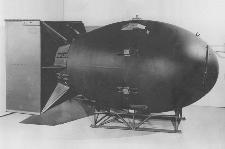
3. The nuclear bomb was code named “Little Boy” and was transported in the belly of an American B-29 bomber (pictured above) called Enola Gay.

4. The bomb instantly killed an estimated 80,000 people, but after taking into account all deaths caused by injury and radiation at the end of that year, the total number of deaths was estimated at 166,000.

5. The population before the atomic attack on Hiroshima was estimated to be 340,000, but following the bombing in 1945, the population dropped to around 137,000.
 

6. The Uranium-based atomic bomb that was dropped on Hiroshima was the equivalent of 20,000 tonnes of TNT and it annihilated about 80% of the city's buildings. The mushroom cloud climbed up to 25,000 feet in the sky.

7. The Oleander was chosen to be the official flower of the city of Hiroshima, because it was the first to bloom, showing signs of renewed life, after the explosion.

8. Six Ginkgo trees, which were growing about one kilometre away from the atomic explosion in 1945, were among the few living things in the area to survive the blast. The Ginkgos speedily recovered and are alive to this day. These trees are sometimes described as living fossils; their origins have been known 250 million years. The city trams also survived the blast and were in fact used to transport the injured away from ground zero. Some of these trams are still in operation today and are a sense of pride for the Japanese people as a sign of resilience. The Bank of Japan building, which was around 400 metres from ground zero, also survived the explosion and due to its thick walls, many people who took refuge inside the bank, were saved.


9. The 1954 film Godzilla, or Gojira in Japanese, was actually created as a personification of a nuclear bomb inspired by the Hiroshima tragedy in 1945. The beast’s weapon of choice was its atomic breath in the form of a radioactive heat wave that it released from its jaws.

10. The Hiroshima city government continues to advocate the abolition of all nuclear weapons and the mayor of Hiroshima is the president of an international  organisation called Mayors for Peace that is working towards the elimination of all nuclear weapons worldwide by 2020. A Peace Flame, lit in 1964 at the Hiroshima Peace Memorial Park, will continue to burn until all nuclear weapons in the world have been destroyed.

Monday, August 3, 2015

Top ten memorable quotes from the 'missile man'

Born in 1931 in Rameswaram, Tamil Nadu, Dr Abdul Kalam was an Indian scientist who served as the 11th President of India from 2002 to 2007.

He spent more than 40 years as a scientist and science administrator, mainly at the Defence Research and Development Organisation (DRDO) and Indian Space Research Organisation (ISRO) and was intimately involved in the India's civilian space programme and military missile development efforts.

He came to be known as India’s Missile Man for his work on the development of ballistic missiles and launch vehicle technology, and played a critical role in India’s Pokhran-II nuclear tests in 1998.

He received several prestigious awards, including the Bharat Ratna, India's highest civilian honour.

A.P.J. Abdul Kalam, who rose from humble beginnings to become one of India's leading scientists and later a hugely popular president, died in Shillong following a cardiac arrest during a lecture at the Indian Institute of Management at around 6.30pm on July 29, 2015. He was 84.

He will be remembered for his 10 most memorable sayings:


1) 'All Birds find shelter during a rain. But Eagle avoids rain by flying above the Clouds.'

2) 'When your hopes and dreams and goals are dashed, search among the wreckage, you may find a golden opportunity hidden in the ruins.'

3) 'If you want to shine like a sun. First burn like a sun.'

4) 'It is very easy to defeat someone, but it is very hard to win someone.'

5) 'Dream is not that which you see while sleeping it is something that does not let you sleep.'

6) 'Thinking should become your capital asset, no matter whatever ups and downs you come across in your life.'

7) 'If a country is to be corruption free and become a nation of beautiful minds, I strongly feel there are three key societal members who can make a difference. They are the father, the mother and the teacher.'

8) 'Learning gives creativity, Creativity leads to thinking, Thinking provides knowledge and Knowledge makes you great.'

9) 'Without your involvement you can't succeed. With your involvement you can't fail.'

10) 'Don’t take rest after your first victory because if you fail in second, more lips are waiting to say that your first victory was just luck.'

Saturday, August 1, 2015

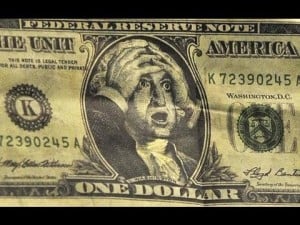
“De-dollarizing” strategy worries Uncle Sam!

Nobody enjoys the milk & honey forever; what goes up must come down...

Russia is about to take another major step towards liberating the Ruble from the Dollar System. Its Finance Ministry just revealed it is considering issuing Russian state debt in Chinese Yuan. That would be an elegant way to decouple from the dependence and blackmail pressures from the US Treasury financial terrorism operations while at the same time strengthening the bonds between China and Russia–Washington’s worst geopolitical nightmare.
Economic-US-DollarRussian Deputy Minister of Finance, Sergei Storchak, announced that his ministry is making a careful study of what would be required to issue Russian bonds denominated in Chinese Yuan. The latest news is part of a long-term strategy between Russia and China that goes at the heart of American hegemony—the role of the dollar as the leading world central bank reserve currency.
The dollar is used in some 60% of central bank reserves today. The second largest is the Euro. Now clearly China is carefully moving, as the world’s largest trading nation, to create its Renminbi or Chinese Yuan as another major reserve currency. That has huge geopolitical implications. So long as the US dollar is the leading reserve currency, the world must de facto buy US dollar Treasury bonds for its reserves. That has allowed Washington to have budget deficits since 1971 when the dollar left the gold exchange standard. In effect, China, Japan, Russia, Germany—all trade surplus countries, finance Washington’s deficits that allow her to make wars around the world. It is a paradox that Russia and China at least, are determined to end as soon as possible.
Last year Russia and China signed enormous 30-year energy deals for delivery of Russian oil and gas to China. The payments will be in local currencies not in dollars. Already in 2014 settlement in national currencies between China and Russia in bilateral trade increased nine times over 2013. Lin Zhi, head of the Europe and Central Asia Department of the Chinese Ministry of Economic Development announced last November that, “About 100 Russian commercial banks are now opening corresponding accounts for settlements in yuan. The list of commercial banks where ordinary depositors can open an account in yuan is also growing.” Last November 18 Russia’s largest bank, Sberbank became the first Russian bank to begin financing letters of credit in Chinese yuan.
Long-term strategy
What all this indicates is that Russia and China are carefully planning a long-term strategy of getting out from dependence on the US currency, something that, as the US sanctions last year revealed, make both countries vulnerable to US currency wars of devastating impact.
China has just been accepted “in principle” by the Group of 7 finance ministers to have its yuan included in the International Monetary Fund basket of currencies making up IMF Special Drawing Rights. Today only US dollar, Euro and Japanese Yen are included in the basket. Including the yuan would be a huge step towards making the yuan a recognized international reserve currency, and at the same time would weaken the dollar share.
China’s foreign reserves consist overwhelmingly of US dollar claims, mainly US Treasury bonds, which is a strategic weakness, because in case of war these can be frozen, as Iran knows too well. It is imperative for China to increase the gold content of the reserves and to diversify the rest into other currencies.
China has also agreed with Russia to unify the new Silk Road high-speed rail project with Russia and Russia’s Eurasian Economic Union. At the same time Beijing has announced it is creating a huge $16 billion fund to develop gold mines along the rail route linking Russia and China and Central Asia. That suggests plans to greatly build up gold as central bank reserve share. China’s central bank has greatly increased its gold holdings in recent years, though whether it is now greater than the alleged Federal Reserve gold holdings of 8000 tons is not yet public. It is expected China must reveal its gold reserves on being formally accepted into the IMF SDR basket perhaps later this year.
Last year, 2014, Song Xin, president of the China Gold Association stated, “We need to establish our gold bank as soon as possible…It can further help us acquire reserves and give us more say and control in the gold market.” A gold sector fund involving countries along the Silk Road has been set up in northwest China’s Xi’an City this May, led by Shanghai Gold Exchange (SGE), part of China’s national bank, PBOC. China is the world’s largest gold producer. Among the 65 countries along the routes of the Silk Road Economic Belt, there are numerous Asian countries identified as important reserve bases and consumers of gold. Xinhua reports that 60 countries have invested in the fund, which will facilitate central banks of member states to increase their holdings of gold.
Dr. Diedrick Goedhuys, former economic adviser to the Reserve Bank of South Africa in an interview told me, “I want to emphasize the unique quality of gold, when viewed as a financial asset, of being an asset that is no-one’s liability. A treasury bond, for instance, is an asset in my hands, but a liability, or debt to be repaid, in the books of the treasury. Gold is a pure asset. The Chinese gold mining plan is of vast importance. It’s a long-term plan; it may take ten years before it has a significant effect.”
Now with Washington and Wall Street increasingly frustrated at how to weaken the Ruble and China’s Renminbi, those two powers are making giant strides to break free from their dollar chains, a move that could liberate much of mankind if done in a good way.

F. William Engdahlis strategic risk consultant and lecturer, he holds a degree in politics from Princeton University and is a best-selling author on oil and geopolitics, exclusively for the online magazine “New Eastern Outlook”.
First appeared:http://journal-neo.org/2015/06/06/russia-gets-very-serious-on-de-dollarizing/

The MH 17 Crash: The Unanswered Questions

more facts and figures to be added later...

The MH 17 Crash: The Unanswered Questions


Western media sources were quick to point the finger at “Russian-backed rebels” operating in Eastern Ukraine, operating a “Russian missile system” to down the Malaysian Airlines flight MH 17 in July 2014. Even the name of Russia’s President was invoked…all without a shred of evidence one year on. Here are some questions to be answered.
1. To make an accusation, you need proof. Without the proof, the accusation amounts to slander or libel. The official enquiry has not yet delivered any hard evidence pointing towards Russia’s involvement in the incident, either passively or actively. Therefore are accusations to the contrary, without evidence to back them up, simply examples of slander and libel levelled by those who have lied time and time and time and time and time again?
2. OCSE monitor Michael Bociurkiw in an interview shortly after the incident on July 17 that there are two or three pieces of fuselage which show indications of heavy machine-gun fire and no evidence of missile damage. How to explain this?
MH 17: The unanswered questions. 55907.jpeg

3. The same monitor declared later that certain pieces of the fuselage looked different a few days after he had first seen them. On July 22, he stated to the BBC that certain sections of the fuselage “do look different than when we first saw them”. Was the wreckage tampered with?
4. What about the eye-witness reports of two Ukrainian Air Force fighter jets trailing the plane at the time of the incident?
Impact holes do not match BUK M1 missile
5. How to explain the circular holes bend inwards at impact, when such holes are made by bullets from machine-gun fire? Shrapnel from a BUK missile system would have caused tears in the fuselage more of a triangular shape and would not have concentrated on and targeted the cockpit specifically. Furthermore, fuselage sections on another part of the aircraft have outward-bent impact marks, showing that the MH-17 was being fired at from two different directions.
6. The caliber of the round bullet holes is from a 30-mm. cannon. If the aircraft was downed by a surface-to-air missile, then how could this produce bullet holes from a machine-gun?
7. The fuselage has other marks besides those of machine-gin fire. Was the aircraft hit by an air-to-air missile as well as machine-gun fire from two different sides from the two aircraft said to be trailing it at the time of impact?
8. Why have fragments of information disclaiming the western theory that pro-Russian or Russian-backed rebels were responsible disappeared from the Internet? Why have Facebook accounts showing such evidence been closed down? Why have blog sites carrying evidence disclaiming the western theory been hacked? Why do stories such as these attract an army of Internet trolls making ad hominem attacks against the author, sending threatening emails to her/his email account and vehemently shrieking abuse and lies without discussing any of the points in question?
9. If a guided missile launched by a BUK-M1 Surface to Air Missile battery leaves a comet-like plume of smoke behind it, and given that no such plume was seen at the time of impact against MH 17, during daylight, would this not point towards the fact that the object responsible for the incident was not, in fact, a BUK missile system?
Turn on your microphones, copy and paste this link into a fresh browser window and watch this:
https://www.youtube.com/watch?v=NPtDy18Nk5I
10. If the impact holes on the aircraft show impact from below and sideways, then how does this implicate a BUK missile system, which strikes the target from above?
11. Looking at the video, how can a complex system costing millions and involving different control vehicles be operated by “rebels”?
Aircraft seen trailing MH-17
12. How to explain that eye witnesses saw aircraft trailing MH17, and then shots, without any missile trail, just before the aircraft exploded?
13. Is there any credence in the theory that President Putin was believed to be flying over the same route at the time? Malaysia Airlines confirms  “A flight from a different carrier was on the same route at the time of the MH17 incident”. Sources who have asked not to be named have claimed that the Russian President’s aircraft has very similar contours and coloring to MH17 and that both aircraft intersected at the same point and altitude at a similar time. It was 200 miles behind MH 17. In the event it did not fly over Ukraine, but the trajectory could have fooled those who wanted to murder President Putin?
14. And how to make sense of this? Kiev’s wrath against anti-Kiev commander Bes was well known. Bes operated precisely in the area of the downed jetliner. Then there was the video tape of a supposed conversation between him and subordinates, uploaded five hours after the crash but placing the time of the crash 35 minutes before it actually took place. The log of the video shows it was made on July 16, so one day before the incident took place? Fabricated false flag “evidence”?
15. The video of a recorded conversation between a Ukrainian military pilot and command flying in the area at the same time regarding a downed aircraft has since disappeared from the Net. Why?
Anti-Fascist forces did not have equipment or know-how
16. The BUK M-1 is a sophisticated piece of weaponry that can only be operated by a team of experts, involving training for months. Such personnel know the difference between a civilian and a military aircraft. Coupled with this, the anti-Kiev freedom fighters in the area possess missile systems that do not operate over 10,000 feet. The MH-17 was flying at 33,000 feet.
17. Why was the aircraft flying over a war zone, where ten aircraft had been downed recently?
18. Why does the downed aircraft show cladding damage characteristic with pin and shrapnel warheads (air-to-air systems), much more characteristic of R-27 TOPOR or R-73 missiles used on the Ukraine military MIG-29 and SU-27 aircraft?
19. One year on, where is the official report? Does it really take that long to doctor the evidence?
20. Given the recent history of geopolitical events and given the following, would anyone put any of the questions raised above beyond NATO in general and the FUKUS Axis (France-UK-US) in particular?

Timothy Bancroft-Hinchey
Pravda.Ru  
(timothy.hinchey@gmail.com)

Timothy Bancroft-Hinchey has worked as a correspondent, journalist, deputy editor, editor, chief editor, director, project manager, executive director, partner and owner of printed and online daily, weekly, monthly and yearly publications, TV stations and media groups printed, aired and distributed in Angola, Brazil, Cape Verde, East Timor, Guinea-Bissau, Portugal, Mozambique and São Tomé and Principe Isles; the Russian Foreign Ministry publication Dialog and the Cuban Foreign Ministry Official Publications. He has spent the last two decades in humanitarian projects, connecting communities, working to document and catalog disappearing languages, cultures, traditions, working to network with the LGBT communities helping to set up shelters for abused or frightened victims and as Media Partner with UN Women, working to foster the UN Women project to fight against gender violence and to strive for an end to sexism, racism and homophobia. He is also a Media Partner of Humane Society International, fighting for animal rights.